 contact@dbuniversity.ac.in
  09476 690 950/ 08011 403 982
Test Program
Integrated Master of Computer Applications (iMCA)
Duration: Five Years (3+2 Integrated Programme) with Multiple Exit Options as per NEP
No of Seats: 60
Integrated MCA
The Integrated Master of Computer Applications (Integrated MCA) is a five-year programme designed to provide a strong foundation in computing along with advanced specialization. Students build core competencies in programming, databases, software development, and emerging technologies before choosing one of the specialization tracks: Full Stack Web Development, Artificial Intelligence & Machine Learning, or Cybersecurity. The programme combines theoretical learning with practical exposure through labs, projects, and industry engagement.
The programme also offers a flexible exit option. Students who successfully complete the first three years may exit with a Bachelor of Computer Applications (BCA) degree, enabling them to pursue career opportunities or continue higher studies as per their academic goals.
Key Features
Empowering Future IT Leaders

Comprehensive Curriculum
Offers a global, industry-ready curriculum that combines theoretical knowledge with practical applications, ensuring students are well-prepared for the evolving demands of the tech industry.

Industry/Research Exposure
Provides opportunities for internships, live projects, and collaborations, giving students hands-on experience and a competitive edge in either industry or academic research.

Practical Skill Development
Focuses on developing a diverse skill set, including programming, data analysis, software development, and problem-solving, equipping students with the tools needed for a successful career in computer applications.
Program Overview & Structure
Three-Week Compulsory Induction Programme
Major Course 1 – Mathematical Foundation of Computer Science I
Major Course 2 – Computer Architecture
Major Course 2 – Computer Architecture Lab
Skill Enhancement Course 1 – Problem Solving Techniques
Skill Enhancement Course 1 – Problem Solving Techniques Lab
Multi-Disciplinary Elective 1 – Indian Knowledge System
Common Value Based Course 1 – Environmental Studies
Ability Enhancement Course 1 – General English – I
Ability Enhancement Course 2 – Communicative Hindi-I / Communicative Assamese-I / French Beginner Level I / Introduction to German Language – I
Major Course 3 – Mathematical Foundation of Computer Science II
Major Course 4 – Data Structures
Major Course 4 – Data Structures Lab
Major Course 5 – Operating Systems
Major Course 5 – Operating Systems Lab
Skill Enhancement Course 2 – Object-Oriented Programming using Java
Skill Enhancement Course 2 – Object-Oriented Programming using Java Lab
Skill Enhancement Course 3 – Web Technologies
Skill Enhancement Course 3 – Web Technologies Lab
Common Value Based Course 2 – Understanding India
Ability Enhancement Course 3 – Communicative Hindi-II / Communicative Assamese-II / French Beginner Level II / Introduction to German Language – II
Major Course 6 – Probability and Statistics
Major Course 7 – Database Management System
Major Course 7 – Database Management System Lab
Major Course 8 – Software Engineering
Skill Enhancement Course 4 – Python Programming
Skill Enhancement Course 4 – Python Programming Lab
Common Value Based Course 3 – Health and Wellness, Yoga Education, and Sports and Fitness
Community Engagement Course 1 – Service Learning Theory
Specialization- I: Full Stack Web Development
Discipline Specific Elective 1 – UI/UX Engineering and Component Design Systems
Discipline Specific Elective 1 – UI/UX Engineering and Component Design Systems Lab
Specialization- II: Artificial Intelligence & Machine Learning
Discipline Specific Elective 1 – Feature Engineering
Discipline Specific Elective 1 – Feature Engineering Lab
Specialization- III: Cybersecurity
Discipline Specific Elective 1 – Introduction to Cybersecurity
Discipline Specific Elective 1 – Cybersecurity Fundamentals Lab
Major Course 9 – Entrepreneurship and Startup Ecosystem
Major Course 10 – Computer Networks
Major Course 10 – Computer Networks Lab
Major Course 11 – Design and Analysis of Algorithms
Major Course 12 – Introduction to Artificial Intelligence
Major Course 12 – Introduction to Artificial Intelligence Lab
Skill Enhancement Course 5 – Design Thinking and Innovation
Community Engagement Course 2 – Service-Learning Practice
Specialization- I: Full Stack Web Development
Discipline Specific Elective 2 – Server-Side Web Development using Django
Discipline Specific Elective 2 – Server-Side Web Development using Django Lab
Specialization- II: Artificial Intelligence & Machine Learning
Discipline Specific Elective 2 – Machine Learning
Discipline Specific Elective 2 – Machine Learning Lab
Specialization- III: Cybersecurity
Discipline Specific Elective 2 – Network Security
Discipline Specific Elective 2 – Network Security & Packet Analysis Lab
Major Course 13 – Quantitative Techniques
Internship – Internship
Project – Mini Project
Specialization- I: Full Stack Web Development
Discipline Specific Elective 3 – ReactJS Fundamentals
Discipline Specific Elective 3 – ReactJS Fundamentals Lab
Discipline Specific Elective 4 – Microservices & API Engineering
Discipline Specific Elective 4 – Microservices & API Engineering Lab
Discipline Specific Elective 5 – Advanced Database Management Systems
Discipline Specific Elective 5 – Advanced Database Management Systems Lab
Specialization- II: Artificial Intelligence & Machine Learning
Discipline Specific Elective 3 – Neural Network
Discipline Specific Elective 3 – Neural Network Lab
Discipline Specific Elective 4 – Digital Image Processing
Discipline Specific Elective 4 – Digital Image Processing Lab
Discipline Specific Elective 5 – Natural Language Processing
Discipline Specific Elective 5 – Natural Language Processing Lab
Specialization- III: Cybersecurity
Discipline Specific Elective 3 – Ethical Hacking & Penetration Testing
Discipline Specific Elective 3 – Ethical Hacking & Kali Linux Lab
Discipline Specific Elective 4 – Cryptography & Secure Communication
Discipline Specific Elective 4 – Cryptography Algorithms Implementation Lab
Discipline Specific Elective 5 – Security Operations & Incident Response Management
Discipline Specific Elective 5 – Security Operations Center Tools & Incident Response Lab
Major Course 14 – Generative AI
Major Course 14 – Generative AI Lab
Ability Enhancement Course 3 – Soft Skills
Project – Minor Project
Specialization- I: Full Stack Web Development
Discipline Specific Elective 6 – Server-Side Development with Node.js and NestJS
Discipline Specific Elective 6 – Server-Side Development with Node.js and NestJS Lab
Discipline Specific Elective 7 – DevOps and Automation Engineering
Discipline Specific Elective 7 – DevOps and Automation Engineering Lab
Specialization- II: Artificial Intelligence & Machine Learning
Discipline Specific Elective 6 – Deep Learning for Computer Vision
Discipline Specific Elective 6 – Deep Learning for Computer Vision Lab
Discipline Specific Elective 7 – Predictive Analysis
Discipline Specific Elective 7 – Predictive Analysis Lab
Specialization- III: Cybersecurity
Discipline Specific Elective 6 – Cloud & Web Application Security
Discipline Specific Elective 6 – Cloud Security & Web Application Testing Lab
Discipline Specific Elective 7 – Digital Forensics and Cyber Investigations
Discipline Specific Elective 7 – Digital Forensics Analysis Lab
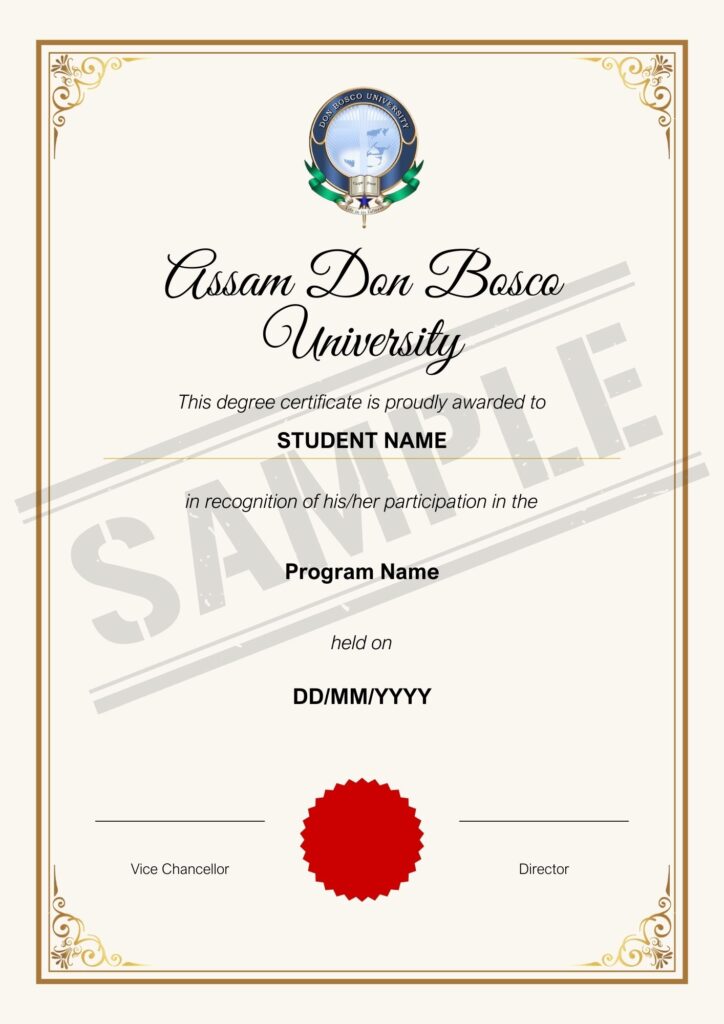
Degree offered by us
Eligibility
Grade /Marks requirement from qualifying examinations
The applicant must have passed Class XII or equivalent from any recognised Board and have scored at least 50% marks in Class XII or equivalent.
The applicant must have studied Mathematics/Statistics/Computer Science/Information Technology, as one of the subjects in Class XII or equivalent.
Entrance Examinations / Personal Interview
Candidates must appear for a personal interview
Salient Features of the iMCA Programme
Five-Year (3+2) Integrated Programme
designed to provide seamless progression from Undergraduate to Postgraduate studies
Research-Oriented Learning
with Minor Project, Major Project, and Dissertation Components
Integrated Internship and Industry Collaboration
for professional readiness
Multiple Exit Options
at the Undergraduate Level as per NEP guidelines
Specialized Tracks
in Full Stack Web Development, Artificial Intelligence & Machine Learning, and Cybersecurity
Strong Focus on Advanced Computing Domains
such as Deep Learning, Generative AI, Cloud & Web Security, DevOps Automation, Digital Forensics, and Predictive Analytics
Research-Oriented Learning
with Minor Project, Major Project, and Dissertation Components
Integrated Internship and Industry Collaboration
for professional readiness
Emphasis on
System Design, Architecture, and Scalable Application Development
Exposure to Emerging Technologies
including Microservices, API Engineering, Computer Vision, NLP, and Security Operations
Innovation and Entrepreneurship Support
through Startup Ecosystem and Technology Incubation Exposure
Community Engagement
and Ethical Computing Practices
Soft Skills, Leadership
and Professional Communication Training
Preparation for Advanced Careers
in Software Engineering, AI Engineering, Cybersecurity Analysis, Research, and Doctoral Studies
Why iMCA at Assam Don Bosco University?
Upon successful completion of 3 years, students will be awarded a Bachelor’s degree in Computer Applications (BCA).
After completing 4 years (3+1 years), students will earn both a Bachelor’s degree in Computer Applications (BCA) and a Post Graduate Diploma in Computer Applications (PGDCA).
Upon completion of 5 years (3+2 years), students will earn both a Bachelor’s degree in Computer Applications (BCA) and a Master’s degree in Computer Applications (MCA).
Our iMCA program adheres to international curriculum standards, ensuring that students receive a globally relevant education that keeps pace with the latest advancements in technology.
Take advantage of our strong industry connections, which provide opportunities for internships, projects, and placements with leading companies.
Our comprehensive curriculum not only focuses on technical skills but also emphasizes soft skills, leadership, and ethical values, preparing students for overall personal and professional growth.
Engage in cutting-edge research projects that address real-world problems and contribute to advancements in the field of computer applications.
Learn from highly qualified and experienced faculty members who are experts in their fields and dedicated to providing quality education and mentorship.
Assam Don Bosco University offers hostel facilities with major amenities, ensuring a comfortable and conducive living environment for students.
We offer a variety of scholarships and financial aid options to support deserving students, making quality education accessible to all.
Our fee structure is designed to be affordable, providing high-quality education at a reasonable cost.
Avail of robust student support services, including career counseling, academic advising, and mental health resources, ensuring a supportive and nurturing environment for all students.
Participate in a variety of cultural, sports, and extracurricular activities that promote a balanced and enriching university experience.