contact@dbuniversity.ac.in
  09476 690 950/ 08011 403 982
📍 Assam Don Bosco University, Tapesia Campus
📅 31 March – 1 April 2026
🏫 Organized by: Department of Botany
🌍 Event Overview
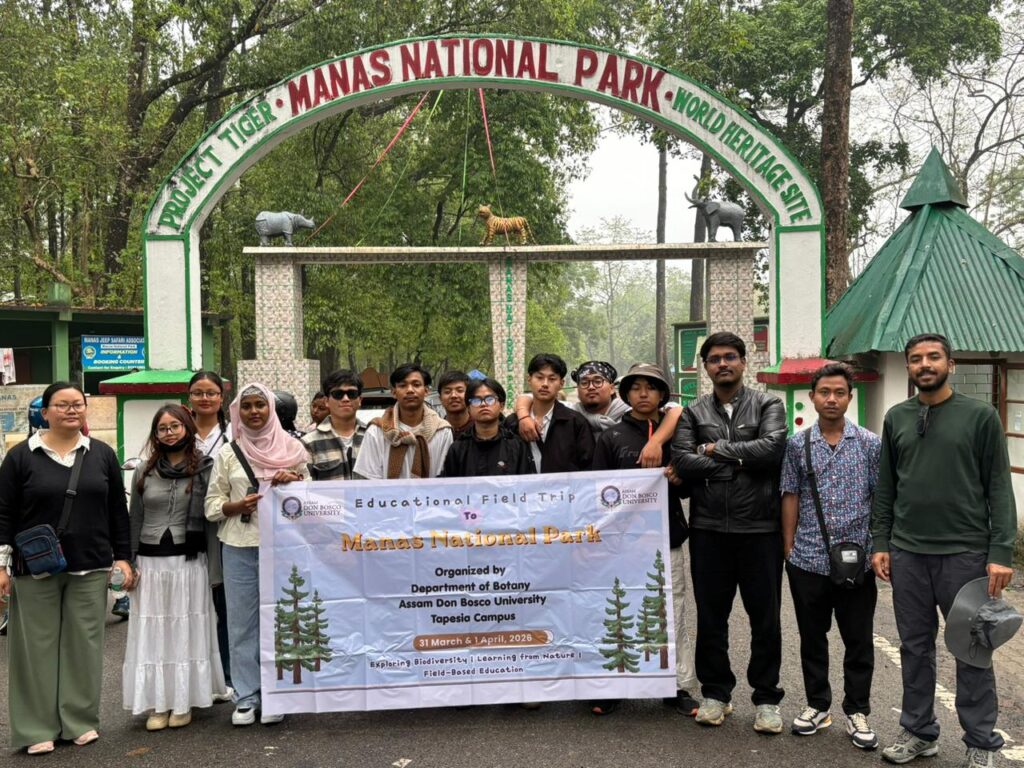
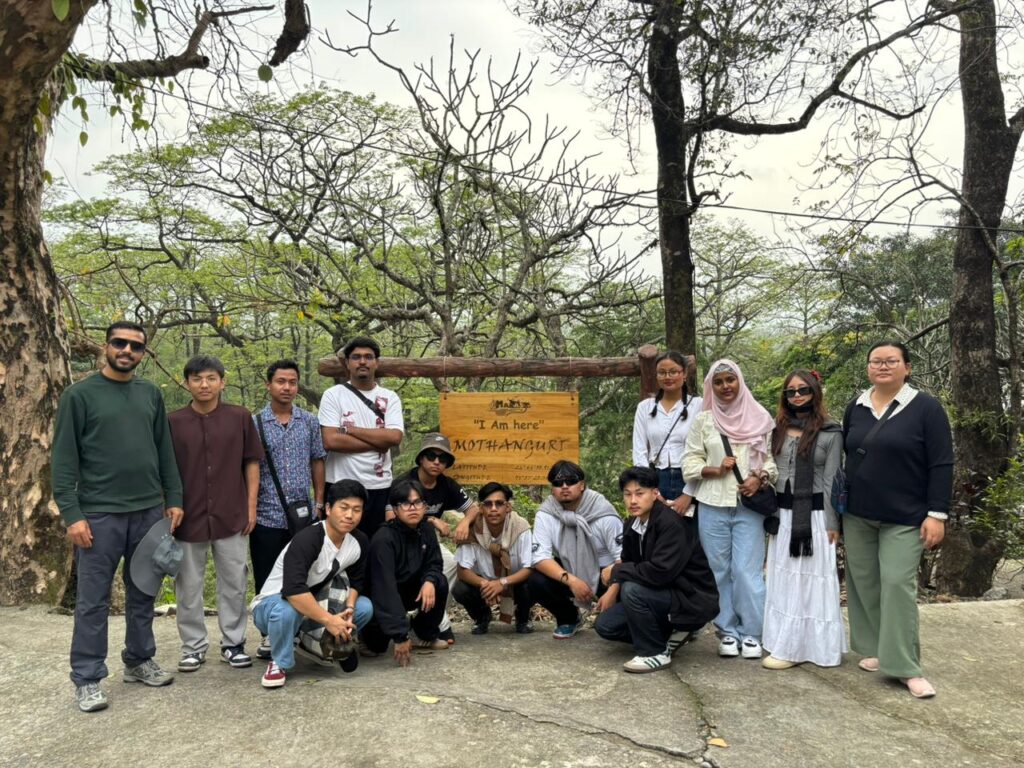
The Department of Botany, Assam Don Bosco University (ADBU) successfully organized a two-day educational field study tour to Manas National Park, a UNESCO World Heritage Site and one of India’s richest biodiversity hotspots.
Conducted as part of the B.Sc. 4th Semester (Plant Ecology) curriculum, the field study aimed to provide students with hands-on exposure to ecological concepts, biodiversity, and natural ecosystems.
🎯 Objectives of the Field Study
- Study natural vegetation and plant community structure
- Understand ecosystem diversity (forest, grassland, riverine)
- Observe ecological interactions in natural habitats
- Analyze species diversity and distribution patterns
- Learn plant adaptations to environmental conditions
- Develop field-based skills like plant identification and observation
- Explore traditional ecological knowledge of local communities
- Understand conservation strategies and protected areas
🚍 Field Experience Highlights
🌾 Day 1: Community Interaction & Traditional Knowledge
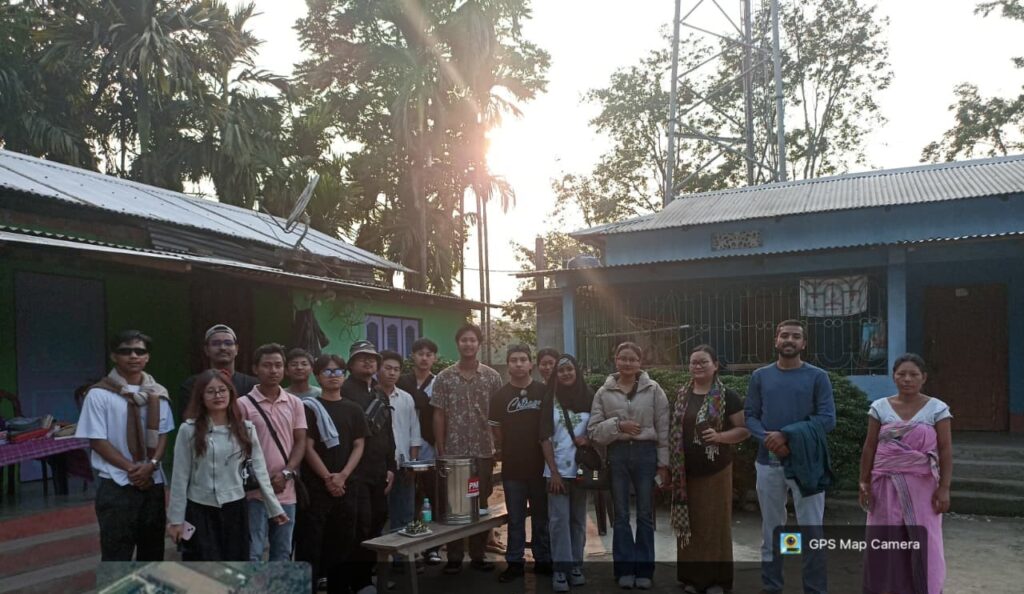
- Students visited nearby villages to explore local culture and traditions
- Learned about:
- 🌿 Sericulture practices
- 🍶 Traditional local wine preparation
- 🌱 Use of plants in traditional medicine
- Gained insights into the relationship between people and plant resources
🌳 Day 2: Ecological Survey at Manas National Park
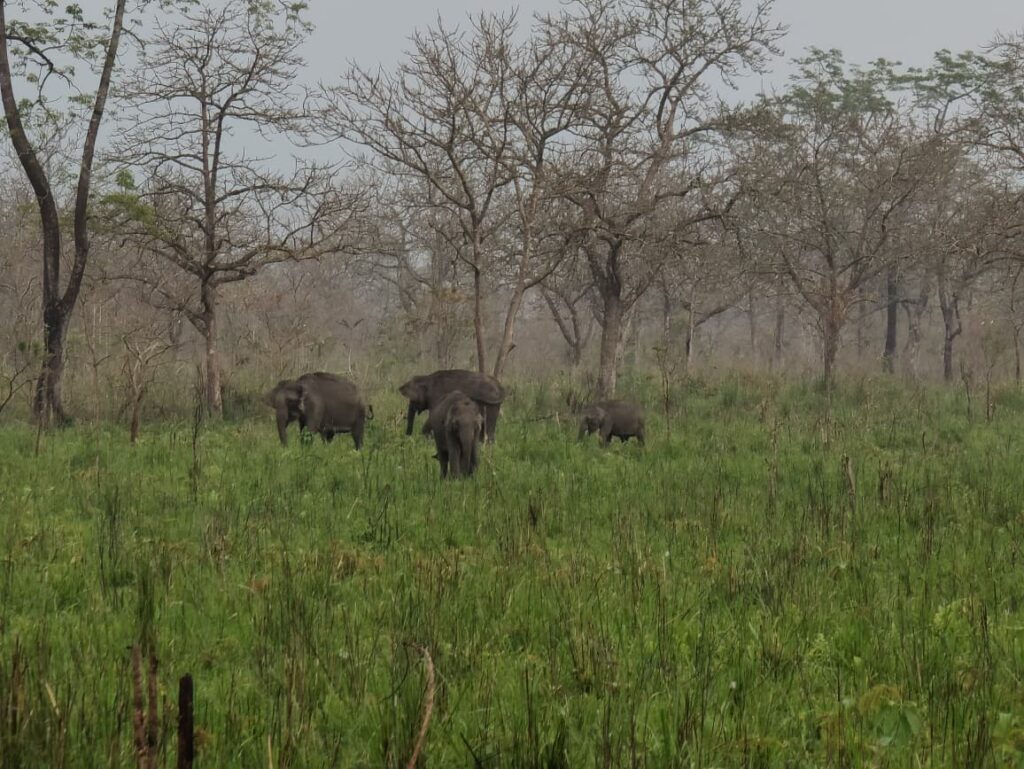
- Conducted a field-based ecological survey inside the national park
- Observed:
- Forest ecosystems
- Grassland ecosystems
- Riverine ecosystems
- Activities included:
- 🌿 Plant identification
- 📊 Study of community structure and species distribution
- 🔍 Observation of ecological interactions (competition, adaptation)
- Students maintained field notes and photographic records
📚 Learning Outcomes
- Enhanced understanding of ecological concepts through real-world observation
- Improved ability in plant identification and ecological analysis
- Knowledge of diverse ecosystems and their functions
- Exposure to traditional knowledge systems and sustainable practices
- Development of fieldwork skills (observation, documentation, analysis)
- Increased awareness of biodiversity conservation and sustainability
- Strengthened teamwork, discipline, and scientific attitude
🌱 Conclusion
The field study tour was highly successful and academically enriching, effectively bridging the gap between theoretical learning and practical experience. Such initiatives play a crucial role in shaping students’ understanding of ecology and fostering a deeper appreciation for nature and conservation.
🌿 Key Takeaways
- Learning beyond classroom enhances concept clarity
- Forest ecosystems are vital for biodiversity and sustainability
- Traditional knowledge plays an important role in resource management
- Fieldwork is essential for ecological research and education