contact@dbuniversity.ac.in
  09476 690 950/ 08011 403 982
ASSAM DON BOSCO UNIVERSITY
School of Life Sciences, Department of Botany
Educational Visit to Gauhati University
Date: 12th November 2025
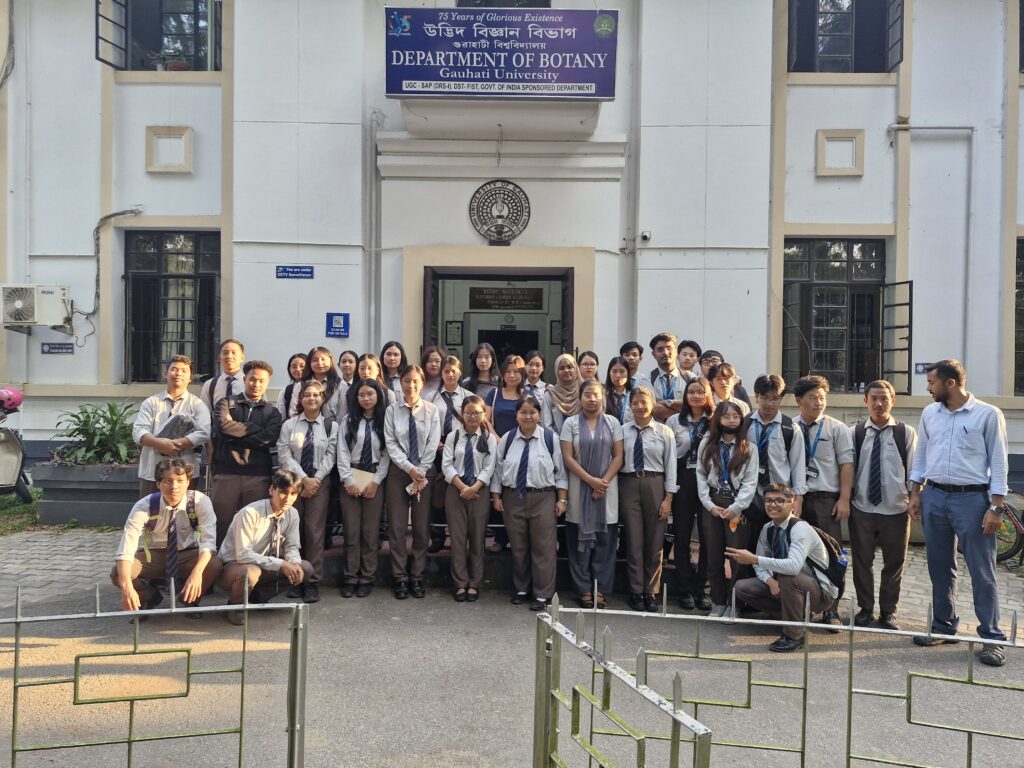
The Department of Botany, Assam Don Bosco University, successfully organized an educational field visit to the Departments of Botany and Zoology, Gauhati University, Guwahati, Assam, on 12th November 2025.
The visit aimed to provide students with practical exposure, hands-on learning, and an opportunity to observe state-of-the-art research facilities in different biological sciences.
🌿 Visit Highlights
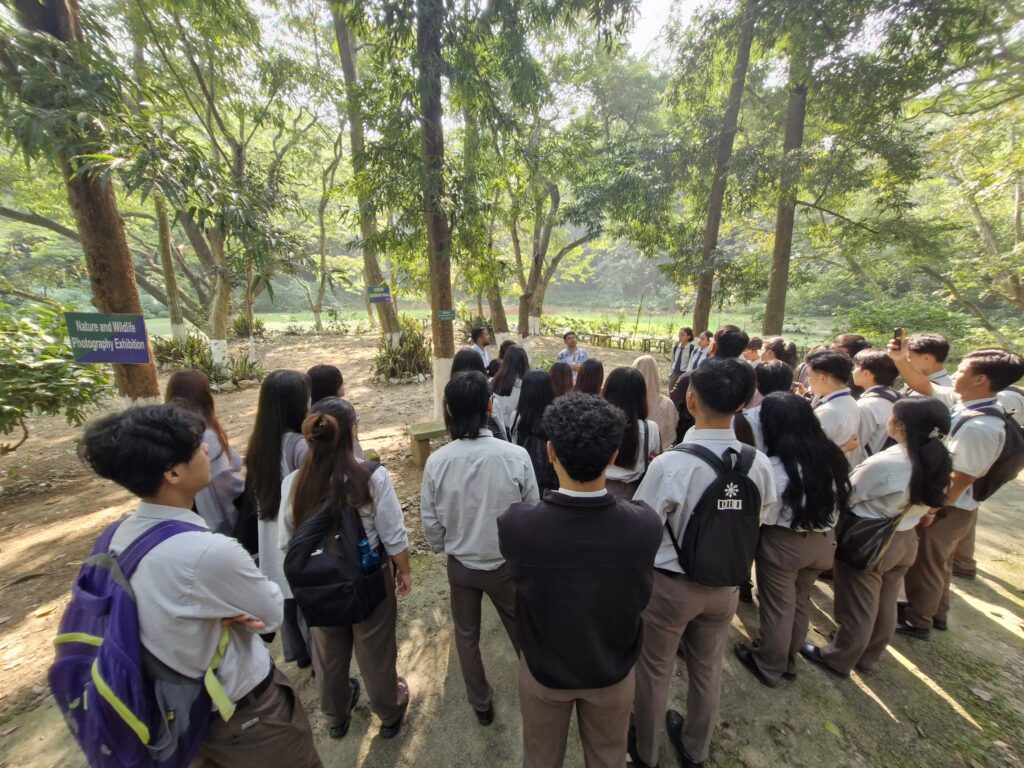
🔹 1. Dr. H.K. Baruah Regional Botanical Resource Centre
Students explored a rich collection of medicinal, endemic, ornamental, and economically important plant species.
Key learnings included:
- Ex situ & in situ conservation
- Herbarium practices
- Seed bank operations
- Live plant collection management
Dr. Rubul Buragohain, Superintendent of the Botanical Garden, guided the tour and explained various plant groups, including pteridophytes, gymnosperms, angiosperms, bryophytes, algae, and mushrooms.
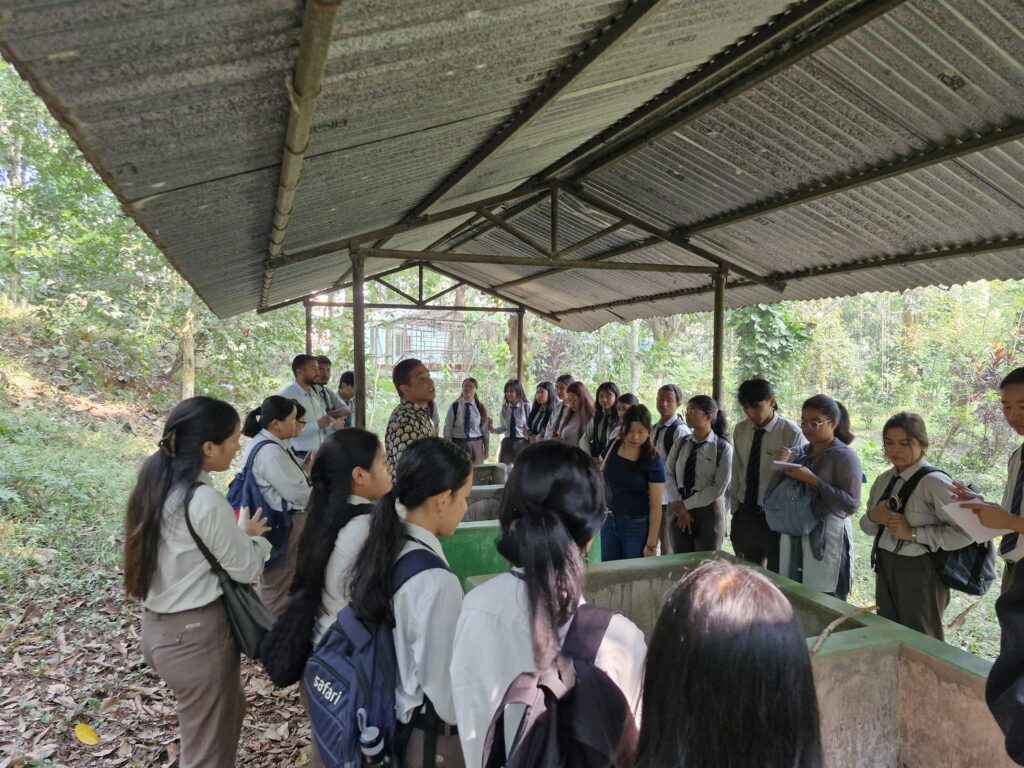
🔹 2. Vermicompost Unit
At the vermicompost facility, students observed the biological conversion of organic waste using species like Perionyx excavatus and Eisenia fetida.
Under the guidance of Dr. Hemen Deka, they learned about:
- Waste segregation
- Bed preparation
- Moisture control
- Compost harvesting
The session emphasized sustainable agriculture and entrepreneurship.
🔹 3. Bio-Compost Unit
The bio-compost unit, demonstrated by Dr. Diganta Narzary, showcased aerobic microbial decomposition using leaf litter, kitchen waste, and agricultural residues.
Students gained insight into:
- Temperature regulation
- pH management
- Aeration and microbial activity
- Carbon-nitrogen ratio
This session highlighted the importance of eco-friendly waste management.
🔹 4. Molecular Biology Laboratory
A major highlight was the visit to the Molecular Biology Lab, equipped with advanced instruments such as:
- PCR machines
- Gel electrophoresis
- Centrifuges
- Laminar airflow chambers
- Spectrophotometers
- Gel Doc
Research scholars demonstrated techniques like DNA isolation, PCR, microbial analysis, and genetic characterization, enhancing students’ understanding of modern biotechnology.
🔹 5. Herbarium Centre
Students learned the scientific process of plant specimen handling:
- Collection
- Pressing and drying
- Mounting
- Labeling and taxonomic organization
The herbarium visit emphasized its importance in biodiversity documentation and taxonomy research.
🔹 6. Aquaculture & Biodiversity Centre (Zoology)
At the Zoology Department, students observed:
- Freshwater fish diversity
- Larval rearing units
- Breeding setups
- Water quality management
The session highlighted the conservation of endemic and threatened fish species and the role of aquaculture in livelihood enhancement.
🎓 Educational Impact
The visit provided students with:
- Exposure to real-world scientific research
- Better understanding of biodiversity conservation
- Practical insights into biotechnology, composting, taxonomy, and aquaculture
- Awareness of interdisciplinary scientific collaboration
The trip successfully connected classroom learning with practical scientific applications, motivating students toward future research and environmental stewardship.