contact@dbuniversity.ac.in
  09476 690 950/ 08011 403 982
Date: 27–29 January 2026
Venue: Auditorium, Academic Block I, Assam Don Bosco University, Tapesia Gardens, Kamarkuchi, Sonapur, Assam
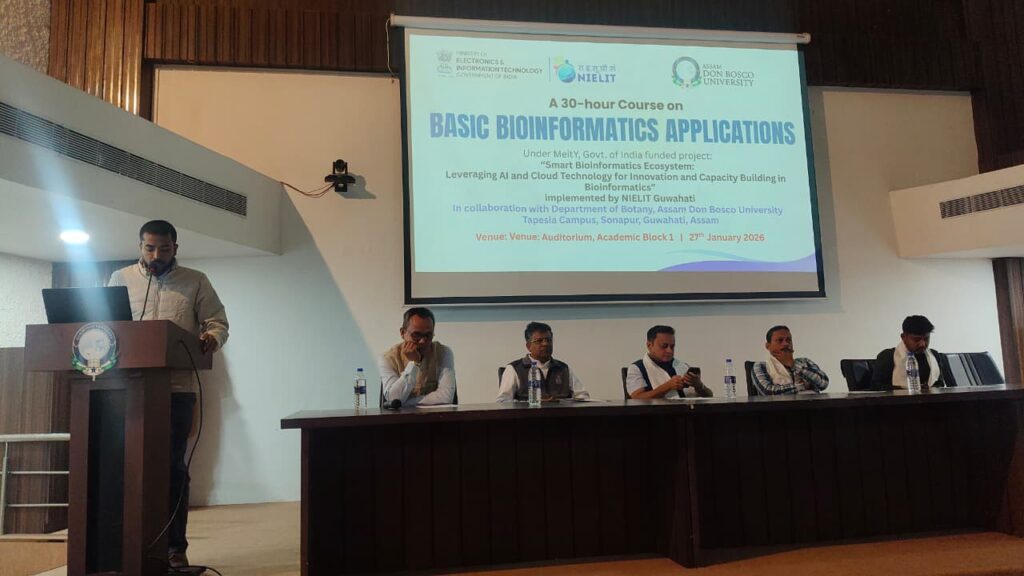
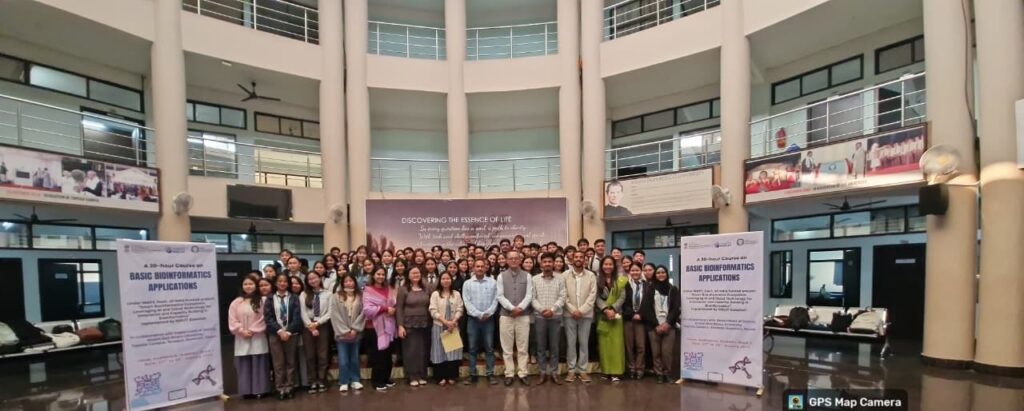
The Department of Botany, Assam Don Bosco University (ADBU), Tapesia Campus, in collaboration with NIELIT, Guwahati, successfully organized a three-day Bioinformatics Workshop from 27–29 January 2026. The workshop was conducted under the MeitY, Government of India–funded project titled “Smart Bioinformatics Ecosystem: Leveraging AI and Cloud Technology for Innovation and Capacity Building in Bioinformatics.”
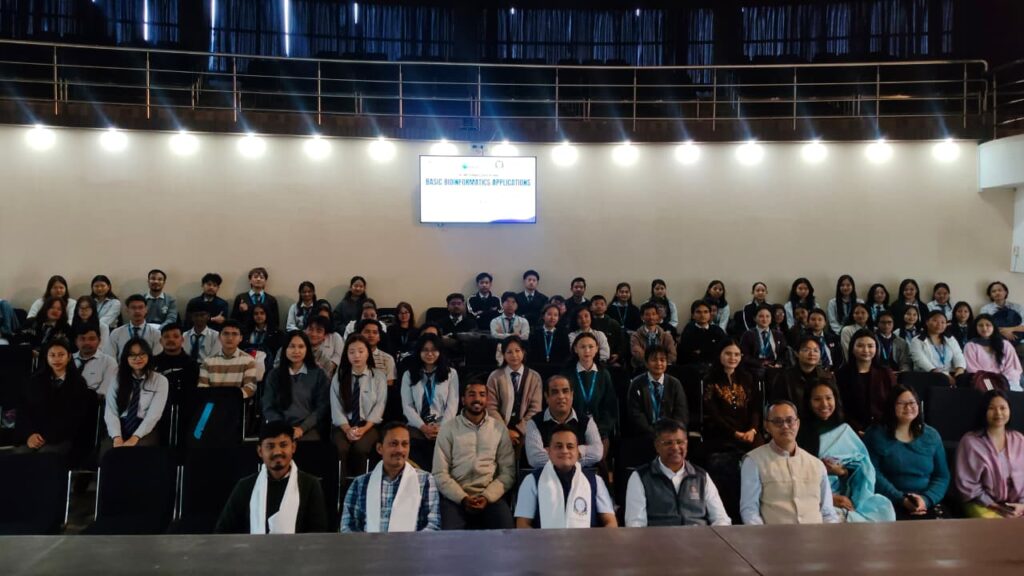
The programme aimed to provide participants with a strong foundation in bioinformatics and its applications in biological research, focusing on biological databases, sequence analysis, alignment tools, phylogenetics, and next-generation sequencing (NGS). A total of 110 students from various departments actively participated, reflecting strong interdisciplinary engagement.
Inaugural Session
The inaugural programme was held in the Auditorium, Academic Block I, and was graced by Fr. (Dr.) Zacharias George, Registrar; Dr. Thounaojam Thorny Chanu, Head, Department of Botany; Dr. Raj Kumar Pegu, Director, School of Life Sciences; and Dr. Saurov Mahanta, Senior Technical Officer, NIELIT, Guwahati.
Dr. Thounaojam Thorny Chanu delivered the welcome address, emphasizing the growing importance of bioinformatics in modern biological research. Fr. (Dr.) Zacharias George highlighted the significance of integrating computational tools into life sciences education. Dr. Raj Kumar Pegu spoke on the academic relevance of bioinformatics tools while Dr. Saurov Mahanta delivered an expert address on the role of Artificial Intelligence, cloud computing, and bioinformatics in contemporary research. The session concluded with a vote of thanks by Dr. Bikash Kalita, Programme Coordinator.
Technical Sessions Overview
Day 1: Introduction to Bioinformatics & Databases
The first technical session, conducted by Dr. Nabajyoti Goswami, introduced participants to the fundamentals of bioinformatics, biological databases, and sequence formats. Key repositories such as NCBI, GenBank, and UniProt were discussed in detail.
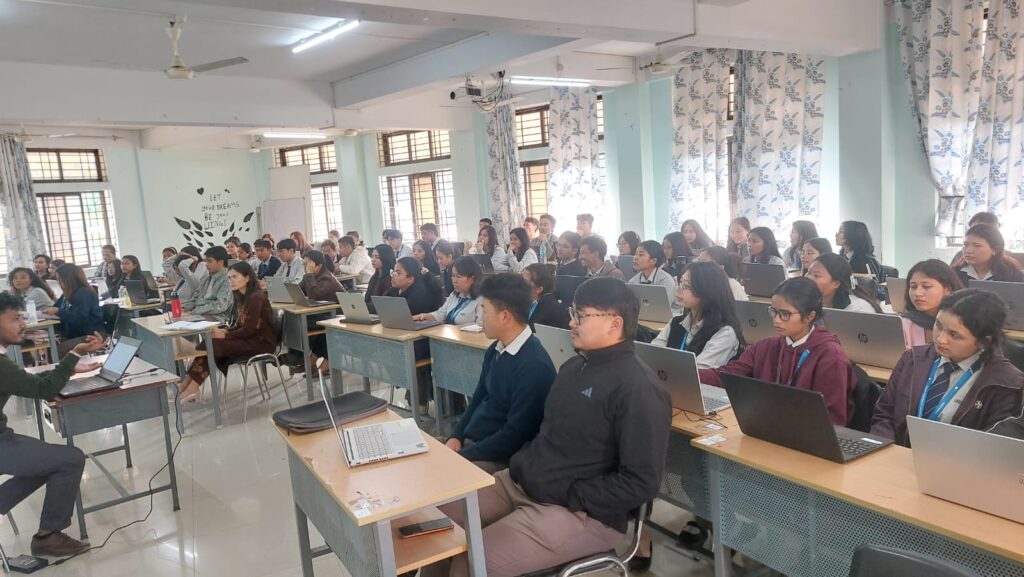
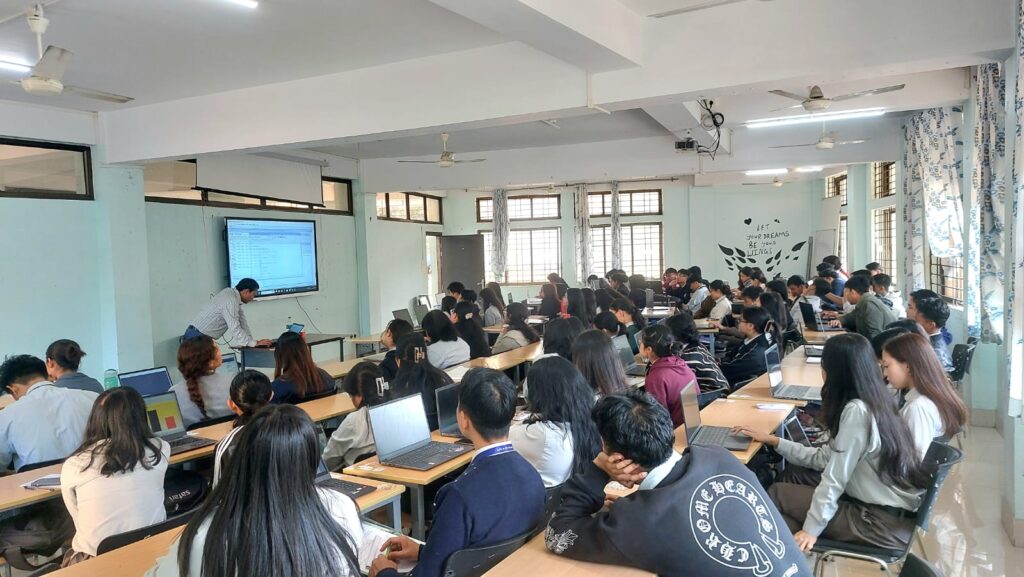
The afternoon practical session, led by Mr. Manabedra Nath, provided hands-on training in database retrieval, sequence downloading, and sequence analysis using BioEdit. Participants were also introduced to online portals such as GISAID, ExPASy, cBioPortal, and Entrez search tools.
Day 2: Sequence Alignment and BLAST
The second day focused on sequence alignment techniques. The theory session covered BLAST, FASTA, and global and local alignment strategies. During the practical session, participants conducted BLAST searches, interpreted alignment scores, and performed sequence alignments using the MPI toolkit. Emphasis was placed on understanding biological interpretation of outputs.
Day 3: Phylogenetics and Next-Generation Sequencing
The final day covered multiple sequence alignment, phylogenetic analysis, and the basics of next-generation sequencing (NGS). Participants received hands-on training in:
- Multiple sequence alignment using ClustalW
- Phylogenetic tree construction using MEGA and RAxML
- Viewing and interpreting FASTA, FASTQ, and VCF files
An assessment test was conducted to evaluate participants’ learning outcomes.
Valedictory & Certificate Distribution
The workshop concluded with a valedictory session and certificate distribution ceremony held in the Auditorium. Students shared positive feedback about the programme, highlighting the practical exposure and expert guidance received. Certificates were distributed to participants, marking the successful completion of the workshop.
Outcome and Impact
The three-day workshop successfully achieved its objectives of strengthening foundational knowledge and enhancing computational skills in bioinformatics. The blend of expert lectures and practical sessions significantly contributed to capacity building in computational biology.
The collaborative effort between NIELIT, Guwahati, and the Department of Botany, Assam Don Bosco University, proved highly effective in fostering interdisciplinary learning and advancing bioinformatics education.