 contact@dbuniversity.ac.in
  09476 690 950/ 08011 403 982
M.A. ECONOMICS (NEP 2020 & CBCS)
Duration: 2 Year / 1 Year for FYUG
No of seats: 60
M.A. ECONOMICS (NEP 2020 & CBCS)
The MA Economics at Don Bosco University offers the students advanced training in the core areas of economics, including computational economics, financial economics and rural economy and developments. Graduates of this programme are adept in applied research and financial analysis, highly competitive on the finance sector job market, and ready for further studies and research in the discipline.

Program Highlights and Advantages
Discover our Degree Programs and begin an exciting educational journey

Emerging specializations
New-age specializations shaping tomorrow's business landscape

Robust Learning Model
550+ hours of video lectures to help you maximize your learning

Personalized Learning
Personalized learning through unique option of choice based credit system

Real World Projects
Real world projects & case studies to help you succeed in your domain
Program Overview & Structure
Theory | Core Course | ENML0046 | Microeconomic Analysis | 4-0-0 | 4 |
Theory | Core Course | ENMY0047 | Macroeconomic Analysis | 4-0-0 | 4 |
Theory | Core Course | ENMM0048 | Mathematical Methods in Economics | 4-0-0 | 4 |
Theory | Core Course | ENFE0067 | Financial Economics | 4-0-0 | 4 |
Theory | Department Elective (DE) | ENMB0050 | Money and Banking | 3-0-0 | 3 |
Theory | School Elective (SE) | ENIP0051 | Indian Economic Development | 3-0-0 | 3 |
Theory | Service Learning | ENSL0200 | Service Learning | 2-0-0 | 2 |
Total Credits | 24 | ||||
Theory | Core Course | ENSM0052 | Statistical Methods in Economics | 4-0-0 | 4 |
Theory | Core Course | ENEO0049 | Economics of Development | 4-0-0 | 4 |
Theory | Core Course | ENPS0054 | Public Economics | 4-0-0 | 4 |
Theory | Departmental Elective (DE) | ENDV0055 | Indian Economic Development and Policy | 3-0-0 | 3 |
Theory | School Elective (SE) | ENPB0056 | Public Finance | 3-0-0 | 3 |
Total Credits | 18 | ||||
Theory | Core Course | ENRM0057 | Research Methodology in Economics | 4-0-0 | 4 |
Theory | Core Course | ENES0058 | Environmental Economics and Sustainability | 4-0-0 | 4 |
Theory | Core Course | ENDI6003 | Dissertation Phase I | 2-0-0 | 2 |
Theory | Discipline Specific Elective (DSE)- (Any one) | ENEG0059 | Agriculture Economics – Issues and Management | 4-0-0 | 4 |
Theory | ENBE0070 | Behavioural Economics | |||
Theory | Discipline Specific Elective (DSE) – (Any one) | ENHE0061 | Health Economics | 4-0-0 | 4 |
Theory | ENOR0065 | Operations Research | |||
Total Credits | 18 | ||||
TYPE | CATEGORY | COURSE CODE | COURSE TITLE | L-T-P | CREDITS |
Theory | Core Course | ENIN0063 | International Economics | 4-0-0 | 4 |
Theory | Core Course | ENPE0064 | Population Economics | 4-0-0 | 4 |
Theory | Core Course | ENDI6004 | Dissertation Phase II | 4-0-0 | 4 |
Theory | Discipline Specific Elective (DSE) – (Any one) | ENNE0071 | Economy of North East Region | 4-0-0 | 4 |
Theory | ENLE0069 | Labour Economics | |||
Theory | ENEI0062 | Economics of Industry | |||
Theory | Discipline Specific Elective (DSE)- (Any one) | ENEM0053 | Econometric Methods | 4-0-0 | 4 |
Theory | ENGE0066 | Gender Economics | |||
Theory | ENED0060 | Economics of Education | |||
Total Credits | 20 | ||||
Total Programme Credits in MA Economics | 80 | ||||
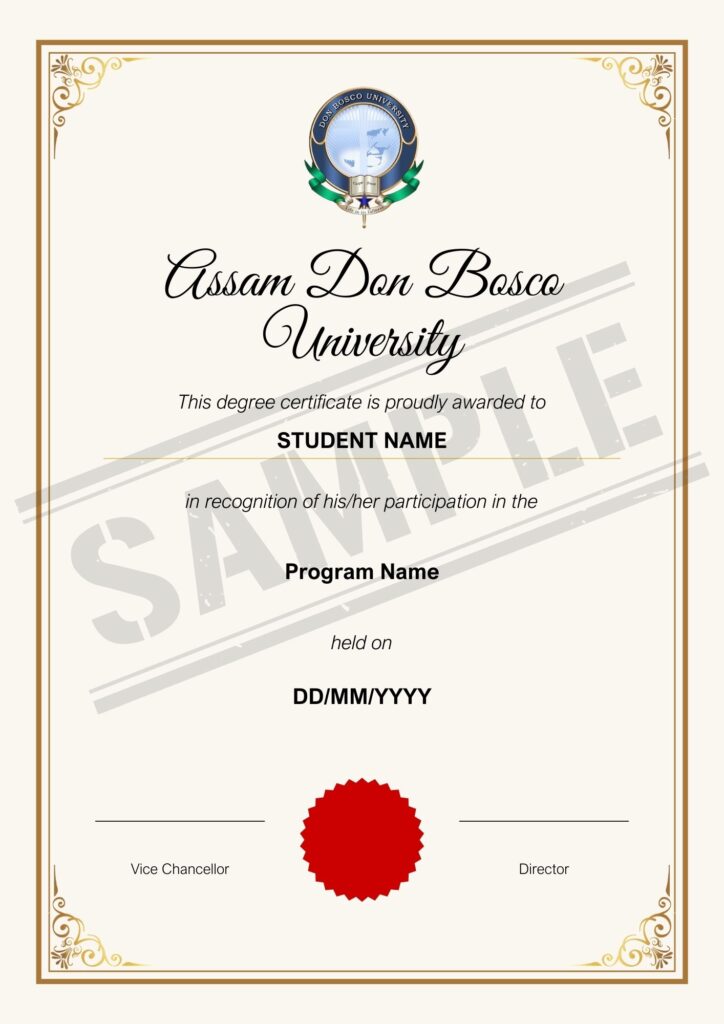
Degree offered by us
Eligibility
Grade /Marks requirement from qualifying examinations
Graduation in any stream with 50% of the aggregate. Those who have a background in Mass Communication, Journalism, Photography, etc., will have an advantage.
Provisional Admission
Applicants who have not yet obtained their Bachelor’s Degree also may apply for admission. Such candidates would be offered provisional admission until they furnish evidence of fulfilling the eligibility criterion stated in (1) above within 3 months of the commencement of the programme.
Career Impact
How We Help You Build Your Dream Career
Industry Mentors
Personalized guidance from career experts throughout the academic journey.
Placement Drives
Connect with employers & explore opportunities through interactive online events.
Master Classes
Access comprehensive help for resume building, interview preparation and job placement.
Profile Building
Build a credible professional profile by showcasing your skills through hands-on projects.
F.A.Q.
The university offers a range of undergraduate, graduate, and doctoral programs across disciplines including engineering, science, arts, business, and health sciences. Each program has its own specific requirements and areas of focus.
You can apply online through our university’s admissions portal. Complete the application form, submit the required documents (such as transcripts, test scores, and recommendation letters), and pay the application fee. Detailed instructions are available on our admissions webpage.
Admission requirements vary by program. Typically, undergraduate programs require a high school diploma and specific academic credentials, while graduate programs may require a bachelor’s degree in a related field, relevant test scores, and work experience. Be sure to review the specific requirements for the program to which you are applying.
Yes, the university offers a variety of scholarships and financial aid programs based on academic merit, financial need, and other criteria. Information about available scholarships and how to apply is available on the university’s financial aid webpage.
Application deadlines vary depending on the program and the intake period (e.g., fall, spring). Be sure to check the program’s admissions page for specific deadlines.