contact@dbuniversity.ac.in
  09476 690 950/ 08011 403 982
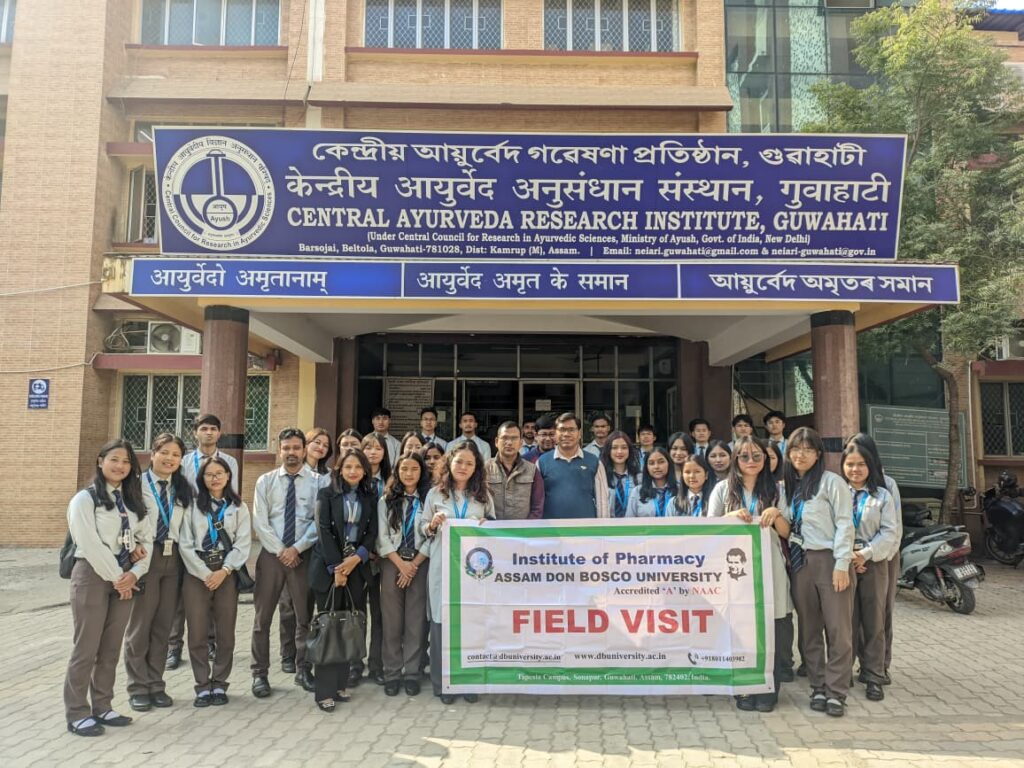
The D.Pharm students undertook an educational field visit to the Central Ayurveda Research Institute on January 24, 2026, gaining first-hand exposure to Ayurvedic research, clinical practice, and pharmaceutical development.
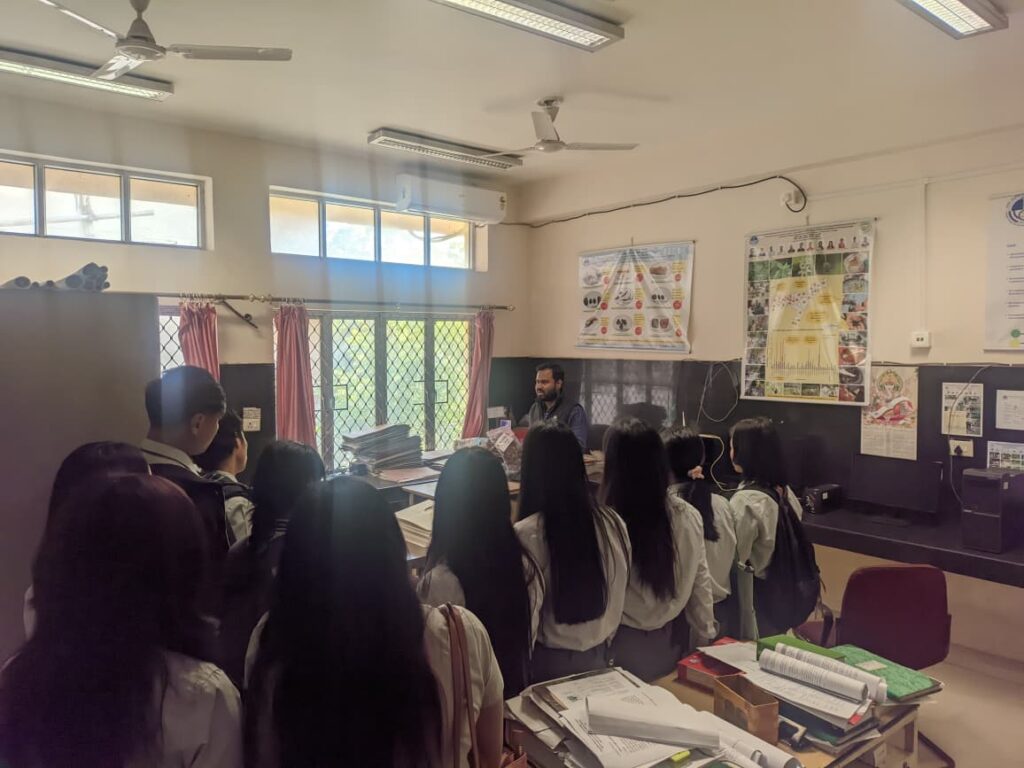
The visit commenced with a warm welcome by the institute staff, followed by an introductory session outlining the institute’s history, mission, and its significant role in promoting scientific research in Ayurveda. The session highlighted ongoing efforts to integrate traditional Ayurvedic wisdom with modern research methodologies.
Laboratory Tour
Participants were divided into two groups for a comprehensive tour of the institute’s state-of-the-art laboratories. Researchers explained ongoing projects, quality control systems, and standardization processes adopted to ensure the safety and efficacy of Ayurvedic formulations. Students observed how modern analytical techniques are applied to validate classical Ayurvedic principles, offering a scientific foundation to traditional medicine.
Herbarium Exploration
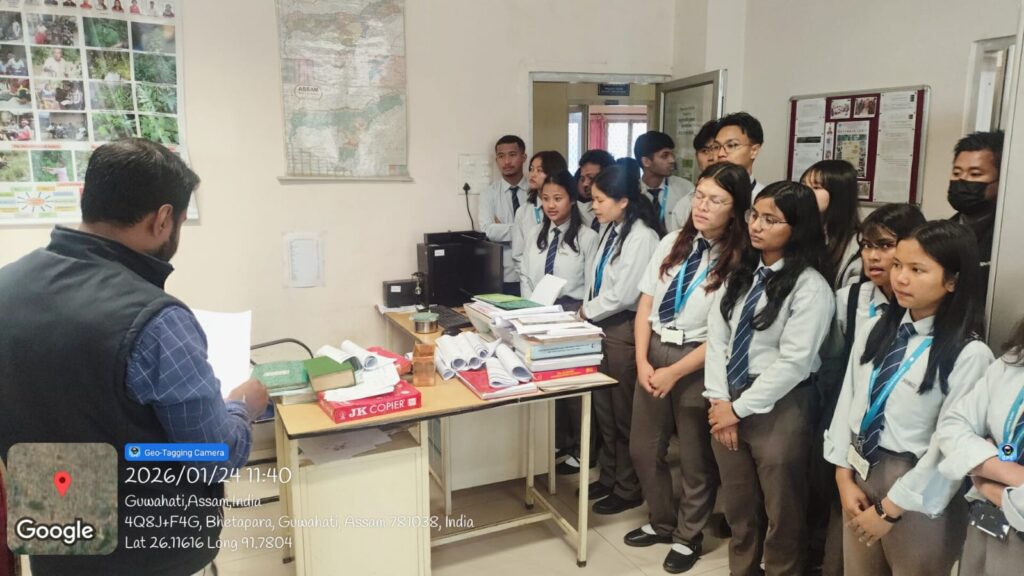
At the herbarium, students examined systematically preserved plant specimens and learned about scientific identification, classification, and conservation of medicinal plants. The session emphasized plant authentication, morphological studies, and the importance of botanical verification in ensuring quality control and standardization of herbal medicines.
Panchakarma Department
The visit to the Panchakarma Department provided insights into Ayurveda’s five major detoxification therapies — Vamana, Virechana, Basti, Nasya, and Raktamokshana. Students observed therapy rooms and equipment used for procedures such as Abhyanga (oil massage), Shirodhara, and Swedana (steam therapy). Staff members explained the clinical relevance of Panchakarma in managing chronic disorders, musculoskeletal conditions, metabolic diseases, and lifestyle-related illnesses. Emphasis was placed on individualized treatment protocols, patient assessment, and post-therapy care.
In-Patient Department (IPD)
In the In-Patient Department, students witnessed real-time patient management practices in an Ayurvedic hospital setting. Medical professionals demonstrated case history documentation, diagnosis based on Dosha, Dhatu, and Mala assessment, and structured treatment planning with follow-up protocols. The exposure helped students understand the systematic clinical framework underlying Ayurvedic practice.
Pharmacology and Animal House Facility
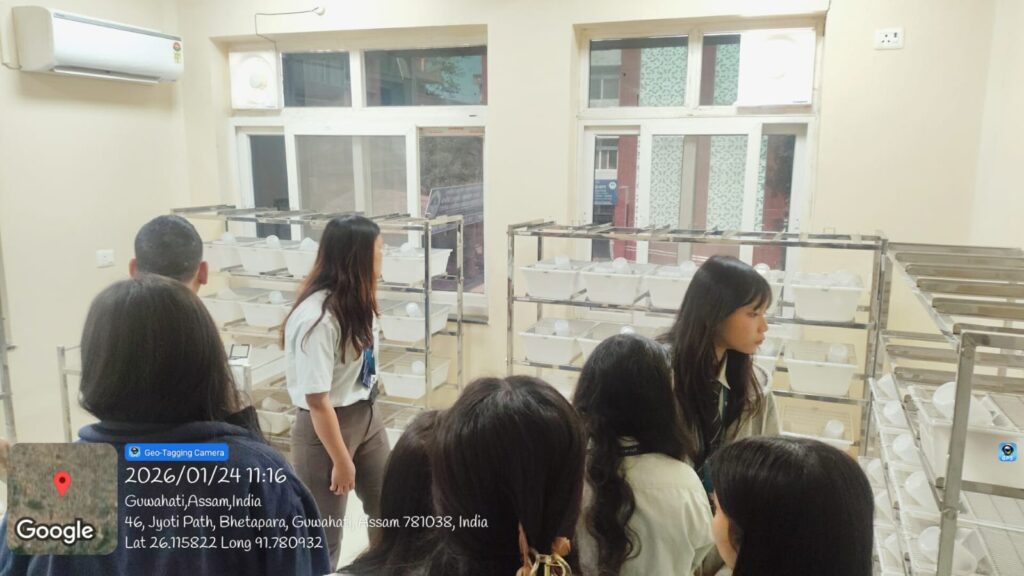
The Pharmacology Department introduced students to experimental models used to evaluate anti-inflammatory, analgesic, antimicrobial, and hepatoprotective activities of herbal formulations. Researchers emphasized the scientific validation of traditional claims through in vivo and in vitro studies. Students also visited the Animal House Facility, where they were briefed on ethical handling, maintenance, and the importance of preclinical studies in toxicity assessment, dose determination, and safety profiling of Ayurvedic medicines prior to clinical use.
Pharmacy Department Exploration
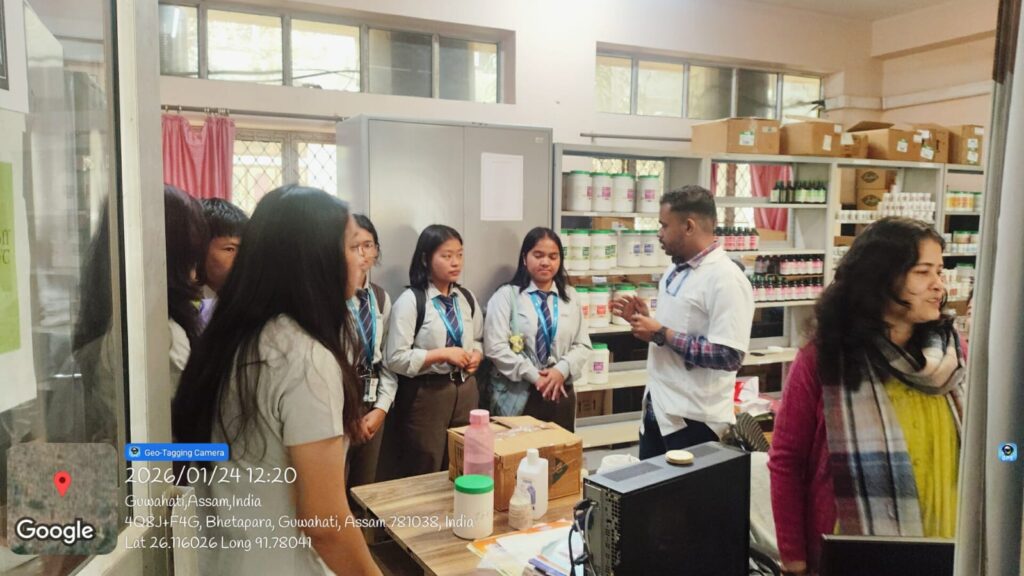
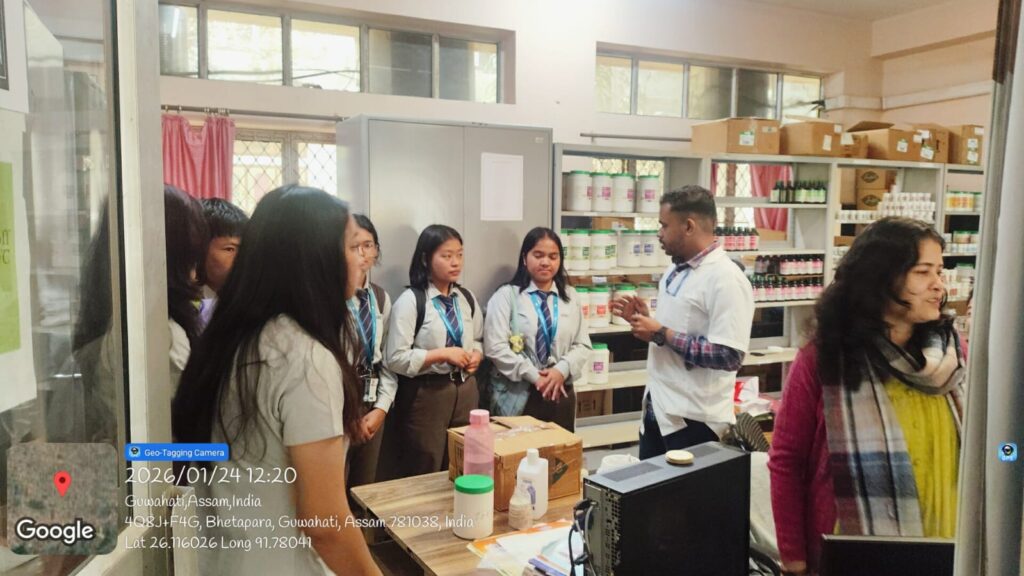
In the pharmacy section, students observed various ready-made Ayurvedic formulations and dosage forms. These included Churna (powders) such as Triphala Churna; Bhasma preparations like Swarna Bhasma; Asava and Arishta fermented liquids such as Dashmoolarishta; Ghrita preparations like Brahmi Ghrita; Taila formulations including Mahanarayan Taila; Guggulu-based medicines such as Yograj Guggulu; and Vati and Gutika tablets like Chandraprabha Vati. The visit enhanced students’ understanding of Ayurvedic pharmaceutics, formulation techniques, and therapeutic applications in disease management.
Interactive Session and Conclusion
An engaging interactive session allowed students to discuss research challenges, innovations, and career prospects in Ayurvedic sciences with senior researchers. The programme concluded with a group photo session across various departments, documented with proper geotag and date records.
The field visit proved to be an enriching and insightful experience, successfully bridging the gap between theoretical learning and practical application. It highlighted the institute’s commitment to preserving traditional Ayurvedic knowledge while advancing it through modern scientific research.