contact@dbuniversity.ac.in
  09476 690 950/ 08011 403 982
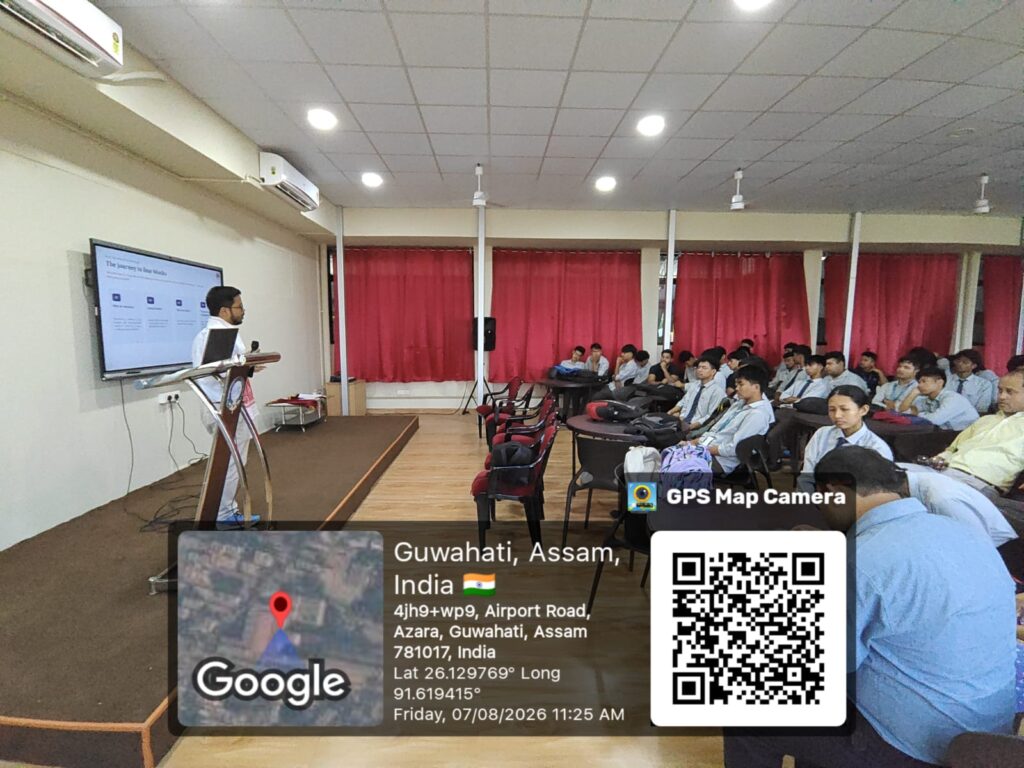
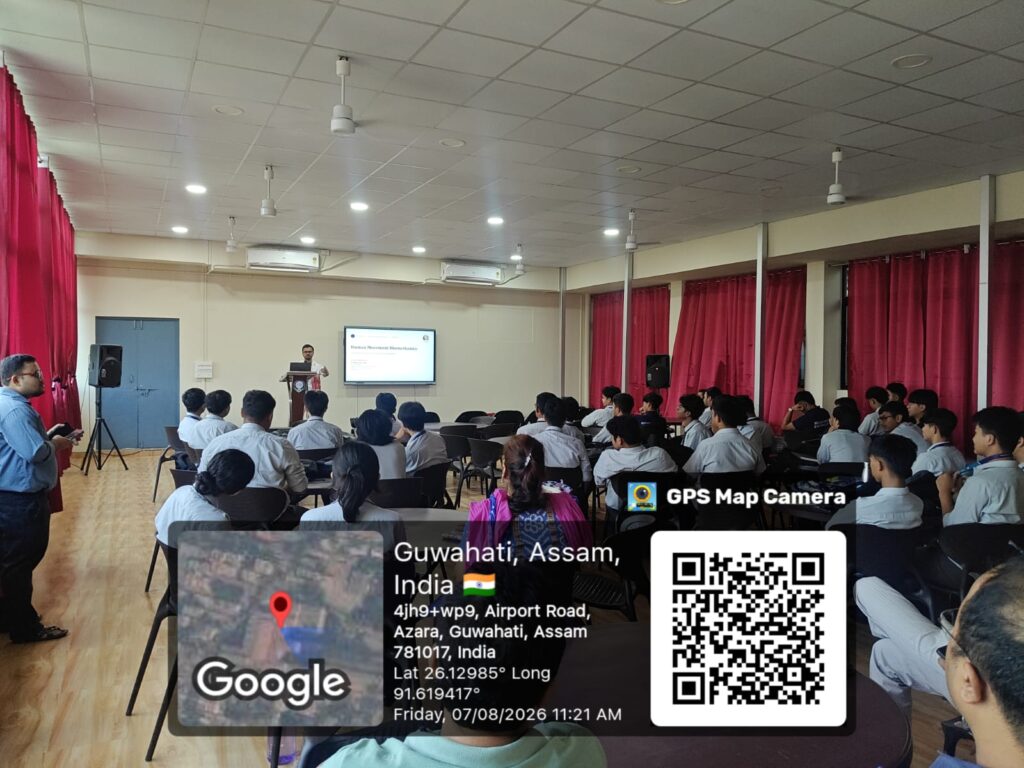
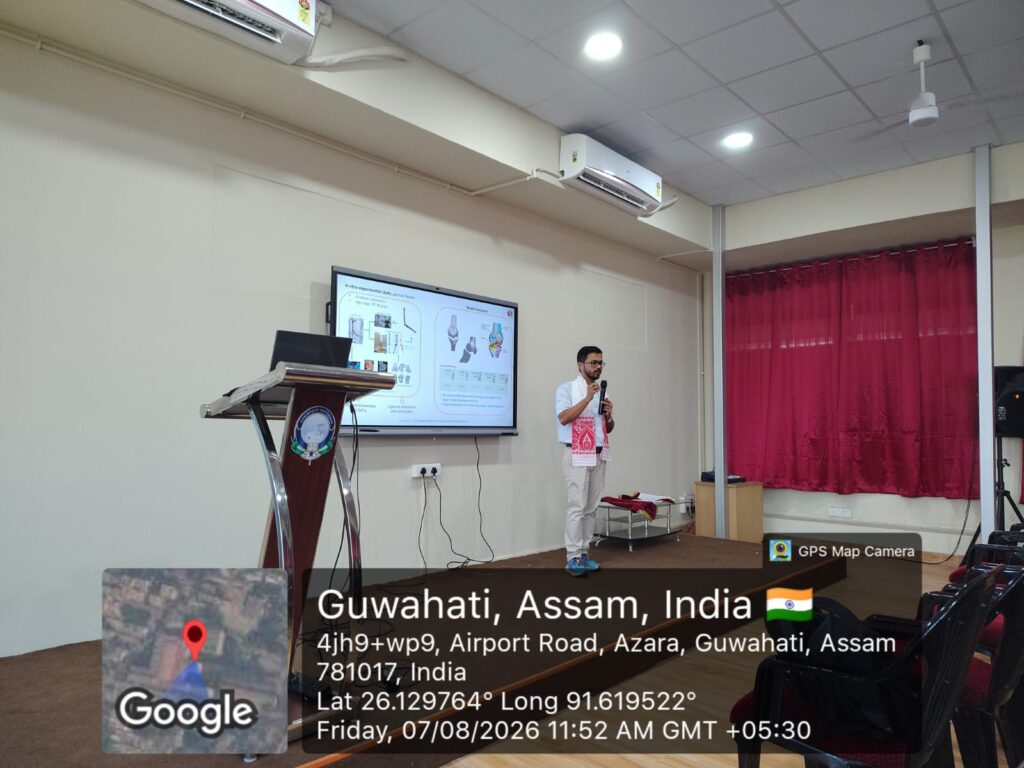
The Department of Mechanical Engineering, Assam Don Bosco University, organized an invited talk on 7 August 2026 for students and faculty members of the department. The session featured Dr. Bhrigu Kumar Lahkar, Assistant Professor, Jyoti and Bhupat Mehta School of Health Sciences and Technology, as the resource person. The talk, titled “Human Movement Biomechanics: From Marker-Based Precision to Vision-Based Intelligence,” focused on the emerging integration of biomechanics, computer vision, and machine learning in the analysis of human movement.
The programme commenced with a welcome address by Mr. Tapash J. Kalita, Assistant Professor, Department of Mechanical Engineering, who welcomed the resource person and participants and emphasized the importance of interdisciplinary learning and exposure to contemporary research. Dr. Lahkar was subsequently facilitated by Dr. Leena H. Nemade, Assistant Professor, Department of Mechanical Engineering.
During the technical session, Dr. Lahkar introduced the participants to various technologies used for tracking and analysing human movement and explained how these approaches can be used to understand the biomechanics underlying human motion. He discussed conventional marker-based motion-capture techniques, highlighting their precision as well as the practical limitations associated with their use. He then elaborated on the transition towards vision-based motion analysis and explained how advances in computer vision and machine learning are helping bridge the gap between the accuracy of marker-based systems and the flexibility of camera-based approaches.
Dr. Lahkar also shared insights into contemporary research and potential applications of intelligent human-motion analysis in healthcare and sports. He discussed how these technologies can support movement assessment and rehabilitation in healthcare, while also offering new possibilities for analysing athletic performance and movement patterns in sports. The session further explored challenges such as variations in human movement, environmental conditions, occlusion, data quality, and the need for reliable and accurate models. The speaker highlighted the growing role of machine intelligence in addressing these challenges and developing more robust and accessible motion-analysis systems.
The session provided students with a valuable perspective on the interdisciplinary applications of mechanical engineering and demonstrated how fundamental concepts of mechanics and biomechanics can be combined with artificial intelligence and computer vision to address real-world challenges. The interaction also encouraged students to explore emerging research areas that extend beyond traditional engineering applications.
The technical session was followed by an engaging question and answer session, allowing students and faculty members to interact with Dr. Lahkar and gain further insights into the subject. The programme concluded with a vote of thanks, expressing appreciation to the resource person and all participants for their valuable contribution to the success of the event.
The invited talk served as an enriching academic engagement, providing participants with an overview of the evolving landscape of human movement biomechanics and the increasing role of intelligent technologies in healthcare, sports, and human-centred engineering applications.