contact@dbuniversity.ac.in
  09476 690 950/ 08011 403 982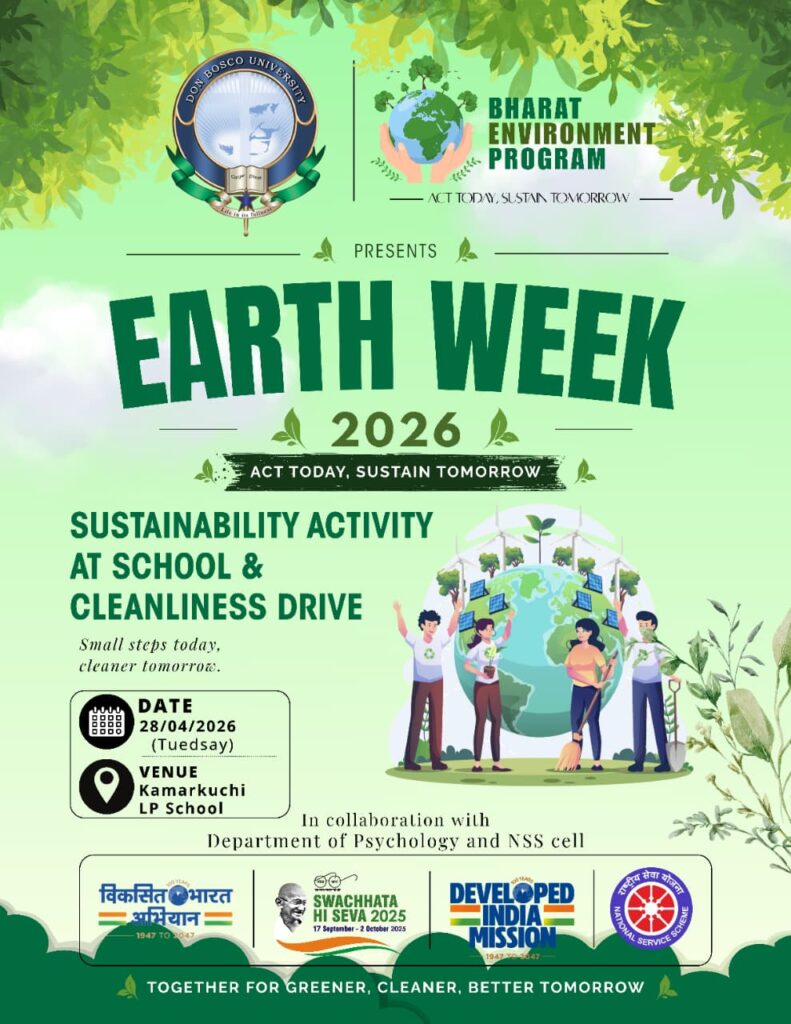
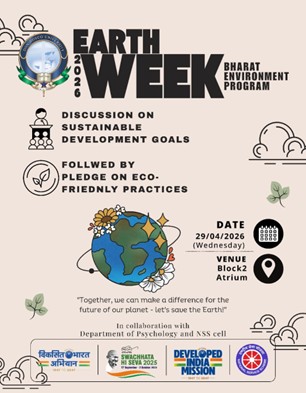
EARTH WEEK 2026
Location: Kamarkuchi LP School
Type of Activity: Community Outreach, Environmental Awareness & Cleanliness Drive
Coordinator: Kamakshi Chakravarty, Assistant Professor & NSS PO, Department of Psychology, ADBU
Student Engagement & Learning Report
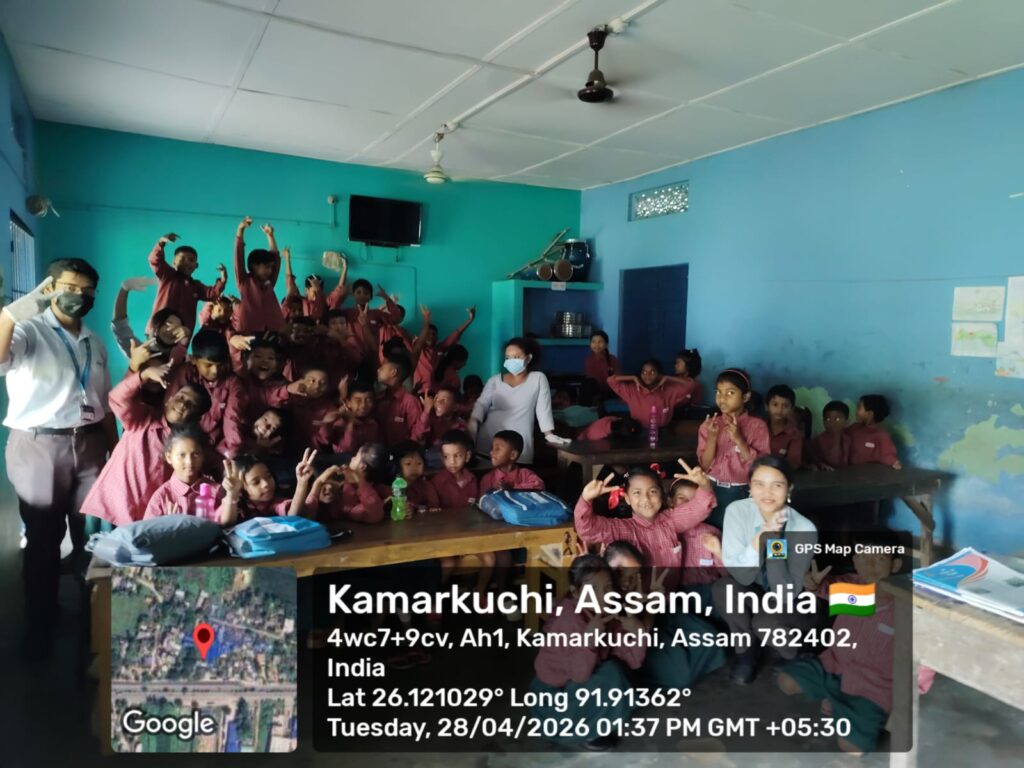
The Department of Psychology organized a “Sustainability Activity at Kamarkuchi LP School & Cleanliness Drive” on 28th April 2026 from 12:30pm onwards as part of the Earth Week 2026. The primary objective of the activity was to promote environmental awareness, sustainable practices, and social responsibility among students through active community engagement.
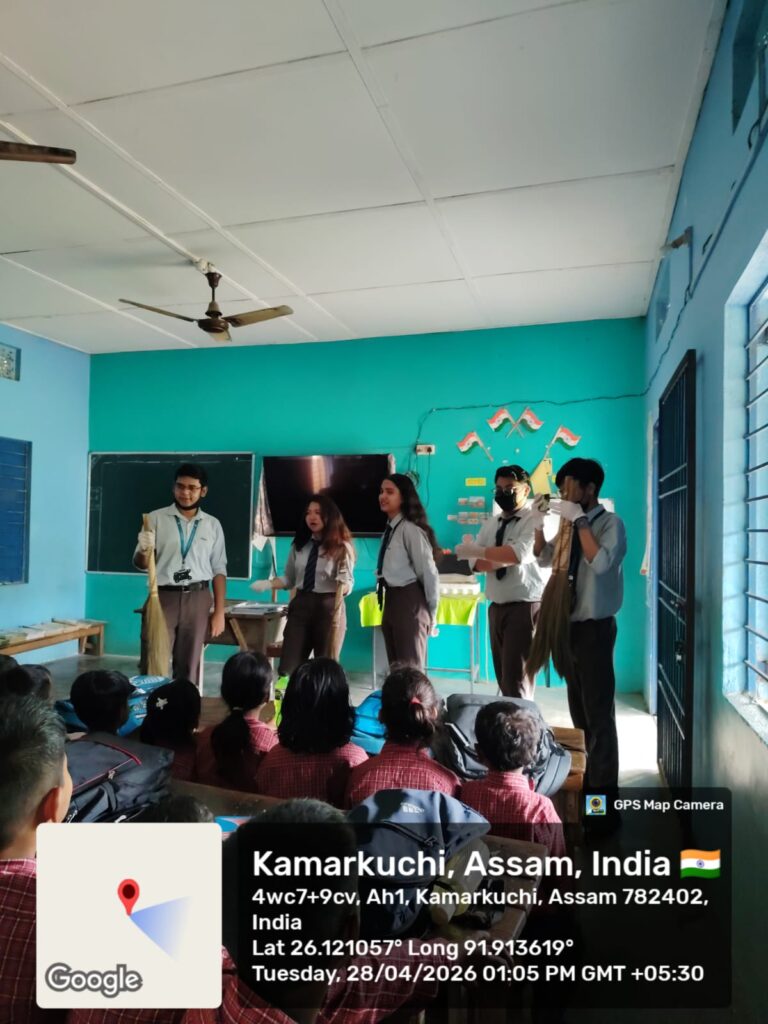
The programme aimed to sensitize school children to the importance of cleanliness, hygiene and eco-friendly habits such as waste segregation and conservation of natural resources, while also providing university students with experiential learning opportunities. Student volunteers conducted interactive awareness sessions using simple and engaging methods to communicate key concepts of sustainability to young learners.
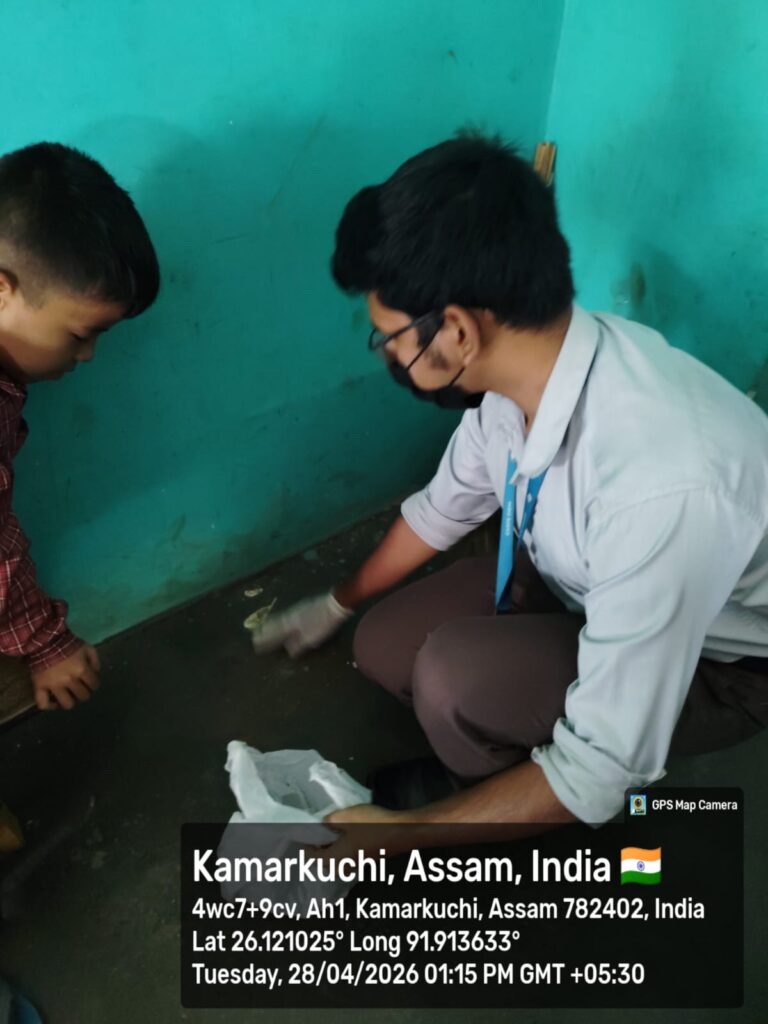
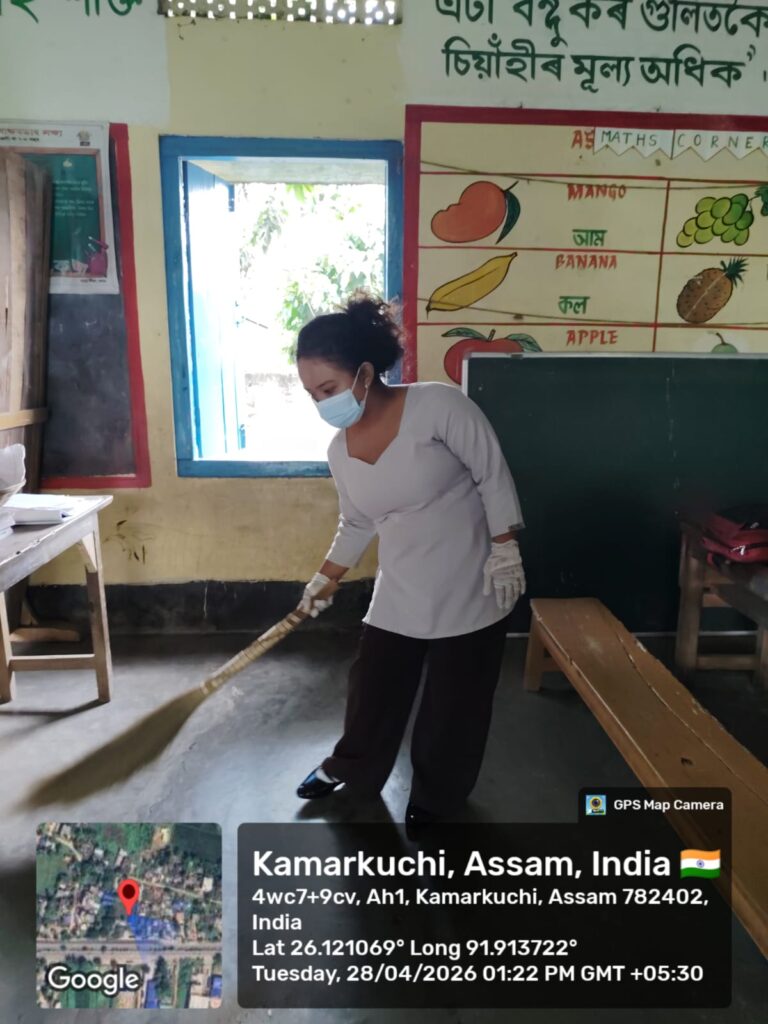
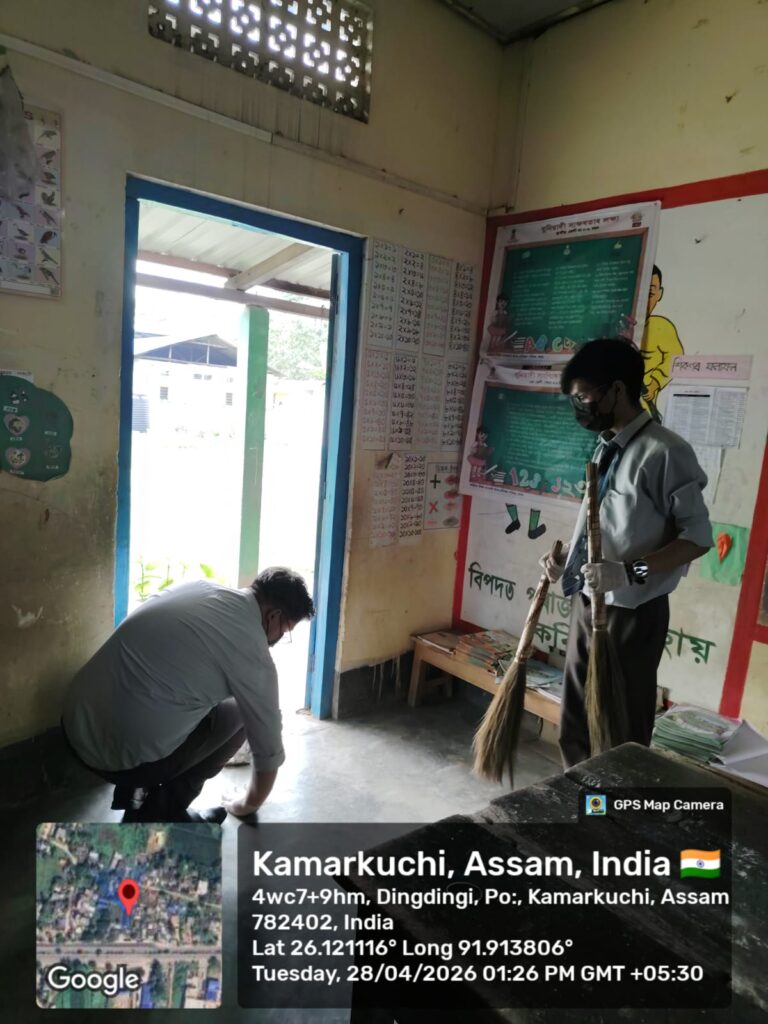
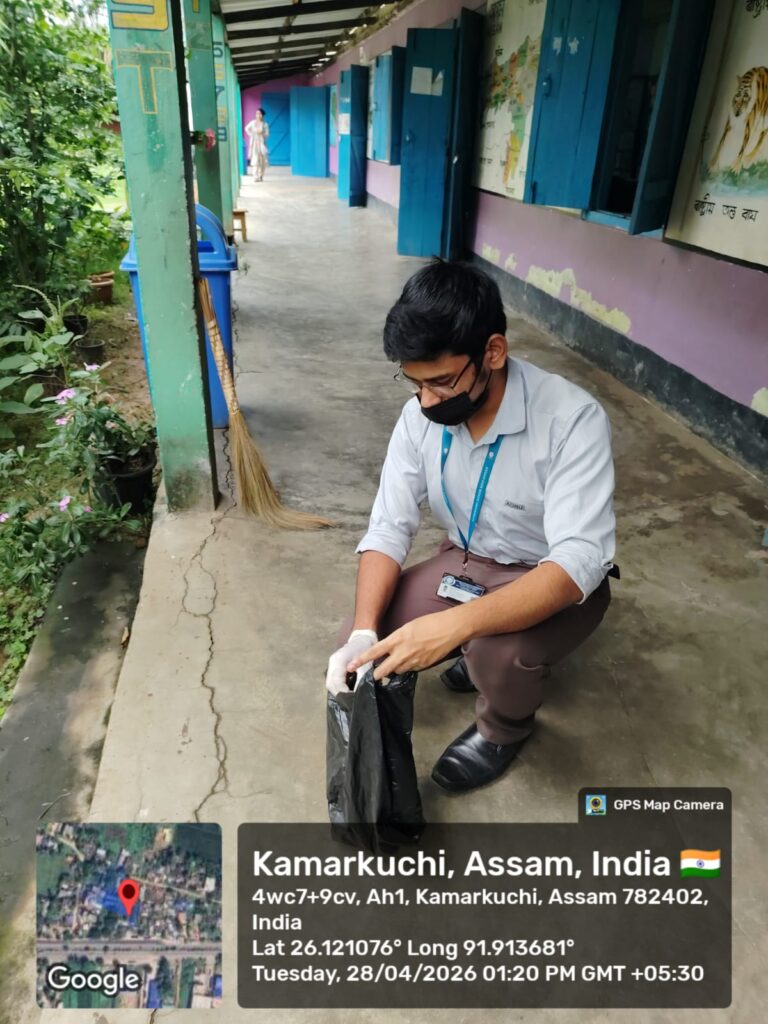
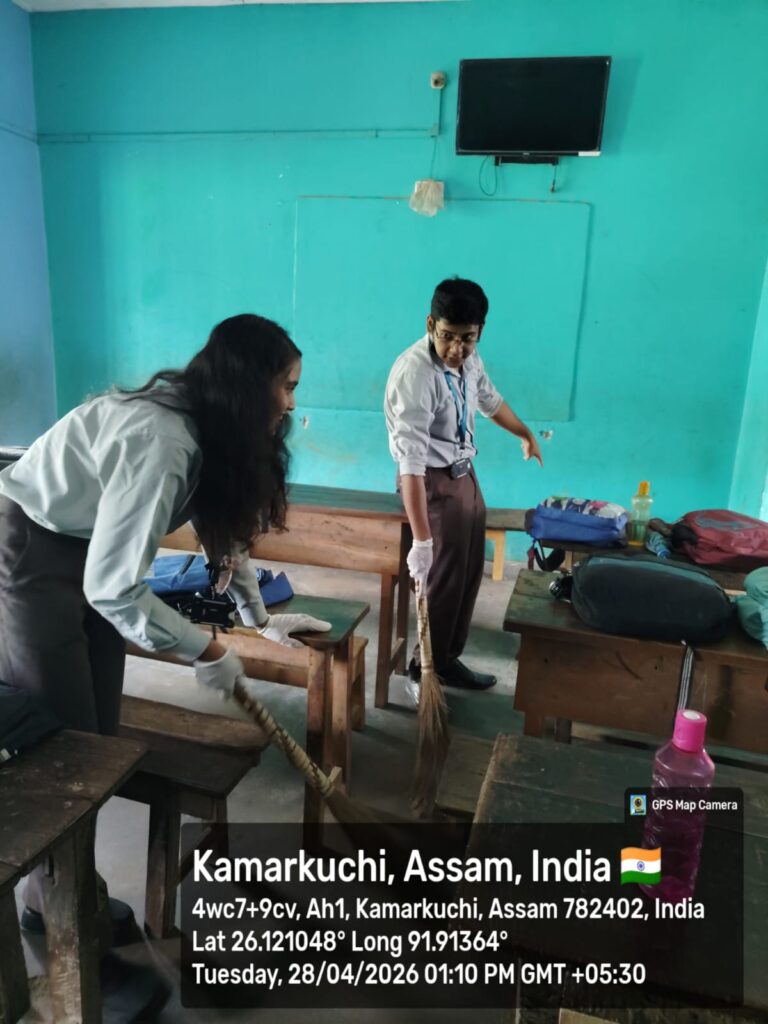
This was followed by a cleanliness drive within the school premises, where volunteers actively participated in cleaning classrooms and surrounding areas, demonstrating the practical application of environmental responsibility. The activity was carried out in collaboration with the NSS Cell.
Through this activity, students developed and demonstrated:
- Awareness of environmental sustainability and hygiene practices
- Responsibility towards community and environmental well-being
- Skills in communication, teamwork, and leadership
- Ability to translate theoretical knowledge into practical action
- Commitment to promoting eco-friendly habits in everyday life
Impact Analysis
The activity generated a meaningful impact on both the participants and the school community by fostering a shared sense of environmental responsibility and civic engagement.
A total of 6 student volunteers actively participated in the initiative, contributing to both awareness generation and cleanliness efforts.
The measurable outcomes include:
- Improved cleanliness of school premises, including classrooms and surrounding areas
- Segregation of collected waste into biodegradable and non-biodegradable categories
- Increased awareness among school students regarding hygiene, sanitation, and sustainable practices
- Enhanced sense of responsibility and community engagement among volunteers
Positive feedback and active participation from school authorities and students