contact@dbuniversity.ac.in
  09476 690 950/ 08011 403 982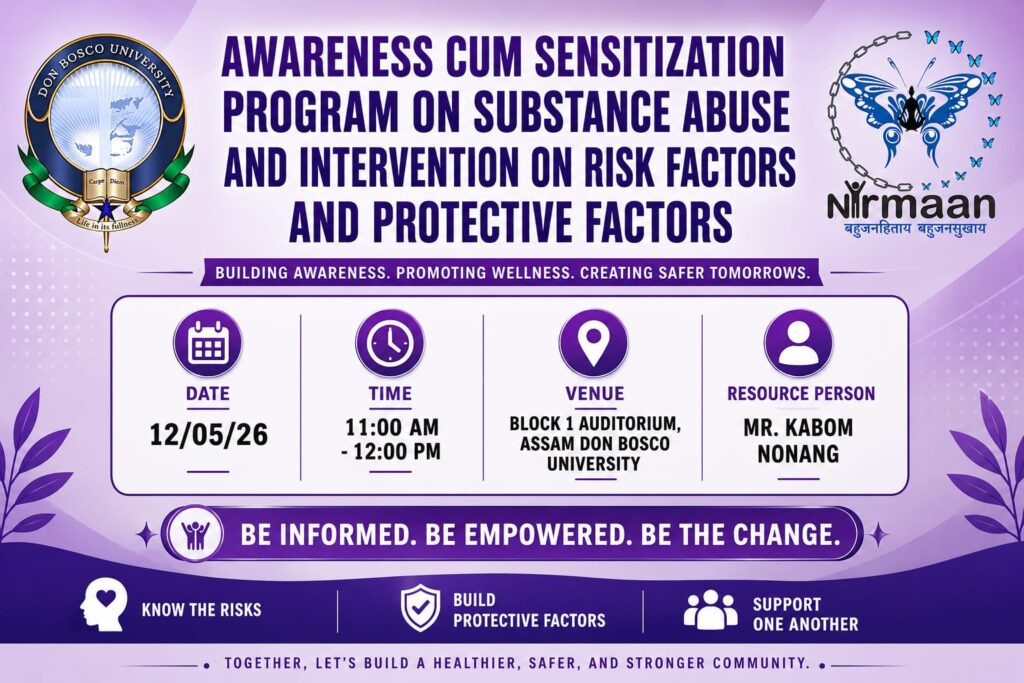
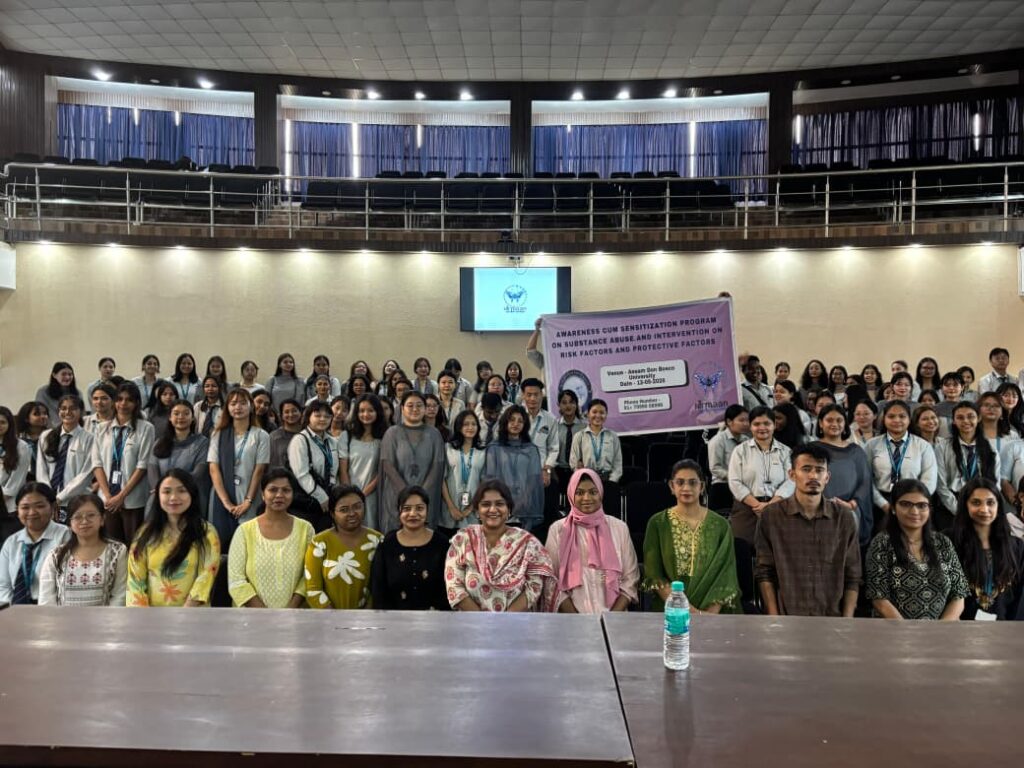
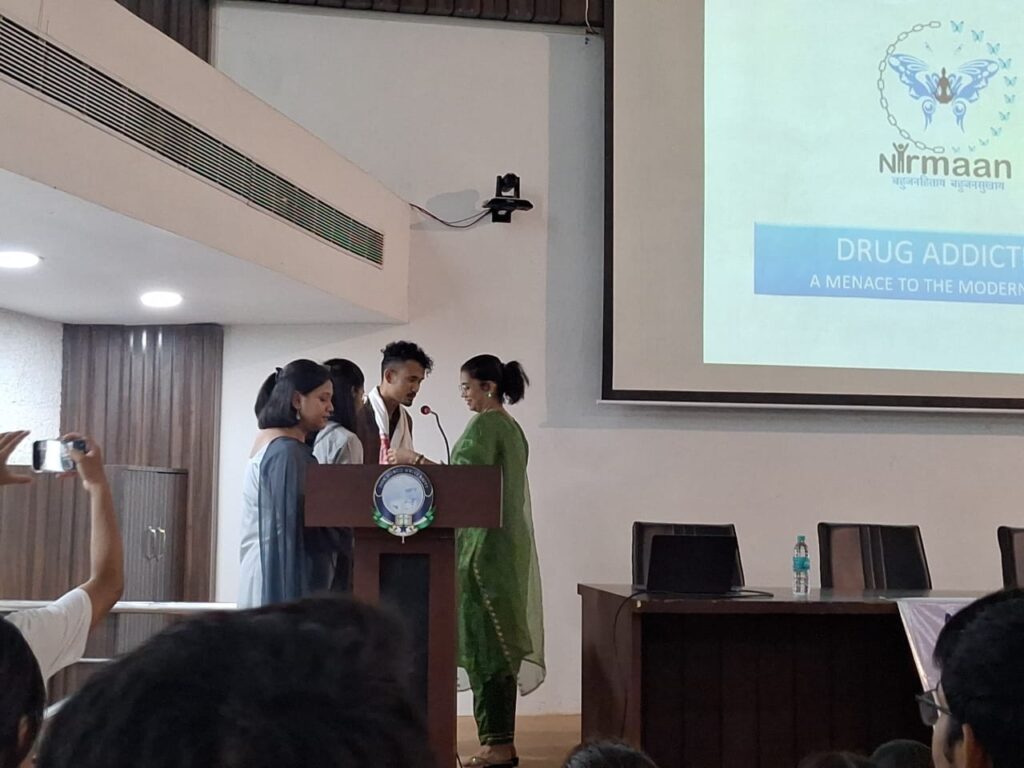
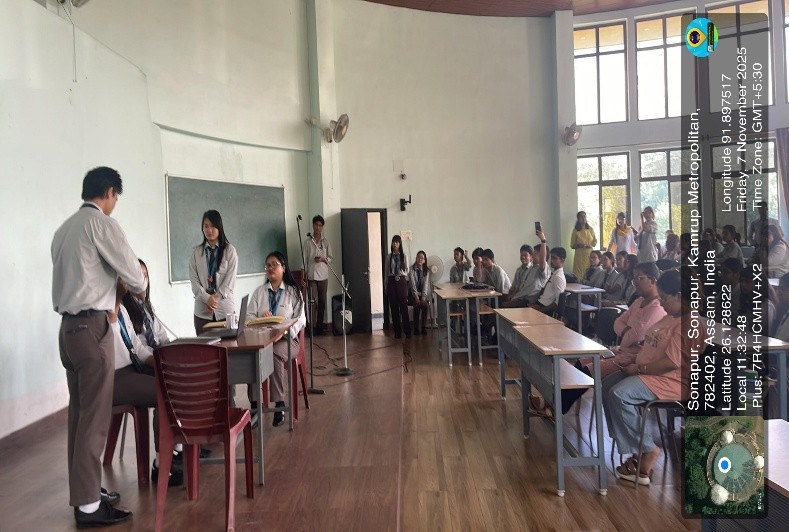
Organised by: Nirman, in collaboration with the Department of Psychology, Assam Don Bosco University, Tapesia Campus
Date: 12 May 2026
Time: 11:00 AM – 12:00 PM
Venue: Block 1 Auditorium, Assam Don Bosco University
Resource Person: Mr. Kabom Nonang
Participants: Undergraduate and Postgraduate students of the Department of Psychology
The key objectives of the programme were:
- To raise awareness regarding substance abuse and substance use disorders.
- To sensitise students to the risk and protective factors associated with substance use.
- To discuss the vulnerable age period for the onset of substance use.
- To identify psychosocial factors that contribute to substance abuse.
- To highlight the availability and accessibility of gateway drugs.
- To familiarise students with the early signs and symptoms of substance abuse.
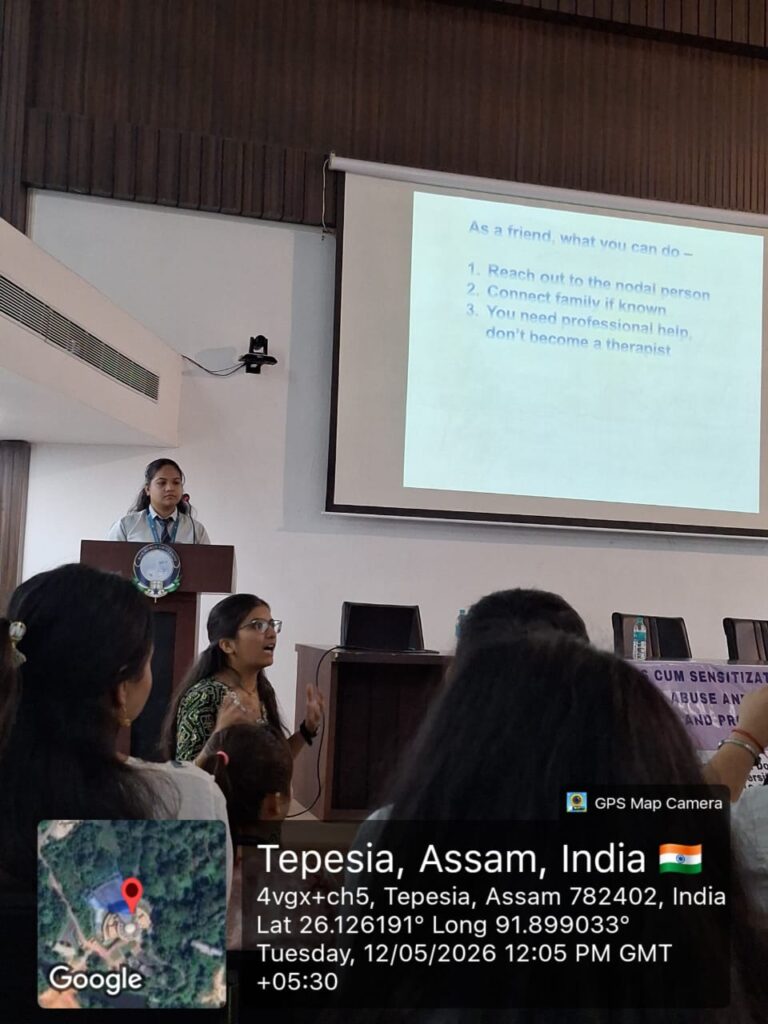
- To discuss how friends and peers can provide support to individuals at risk.
- To introduce the concept of harm reduction and practical intervention strategies.
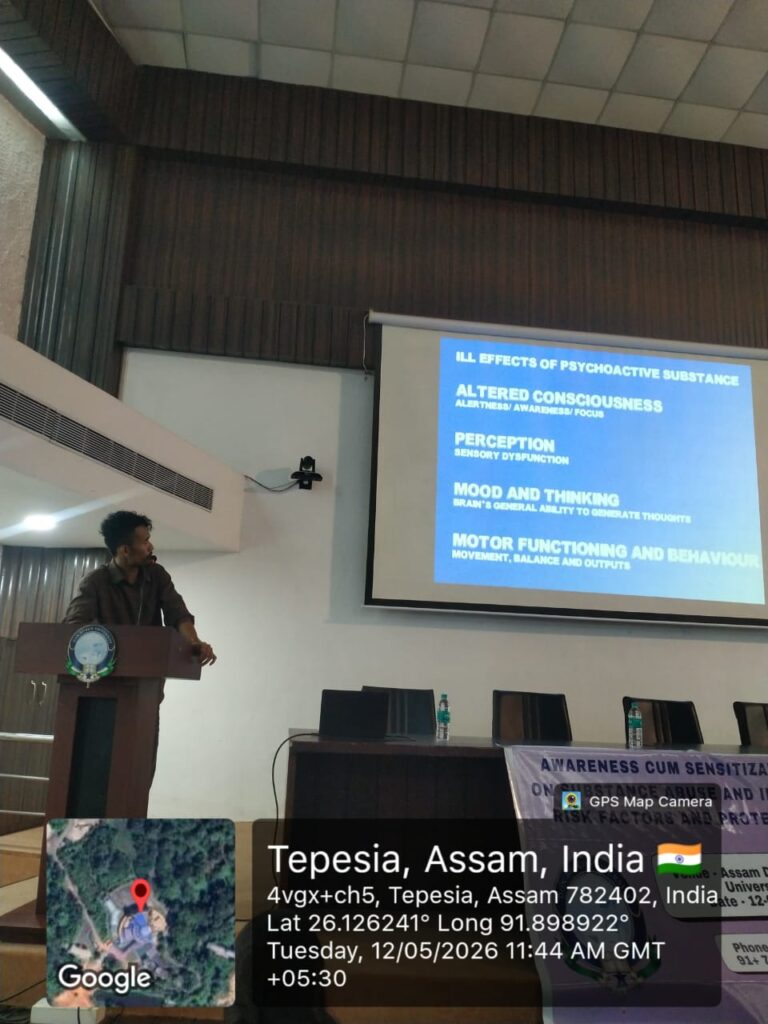
The programme aimed to raise awareness about substance use disorders (SUD) and equip students with knowledge regarding the major risk and protective factors associated with substance abuse. The resource person highlighted that adolescence and young adulthood represent a particularly vulnerable period for the initiation of substance use. He discussed various psychosocial factors that contribute to substance use disorders, including peer pressure, academic stress, family conflict, emotional distress, and poor coping skills.
The session also focused on the availability and accessibility of gateway drugs such as tobacco, alcohol, and cannabis, and explained how early experimentation with these substances may increase the likelihood of more severe substance dependence. Students were sensitised to the early signs and symptoms of substance abuse, including behavioural changes, decline in academic performance, social withdrawal, and mood disturbances.
A practical and important component of the programme addressed how students can support friends who may be struggling with substance use. Participants were encouraged to approach such individuals with empathy, check in with them in a non-judgmental manner, and guide them toward professional help when necessary. The concept of harm reduction was also introduced as a realistic and compassionate approach aimed at minimizing the adverse consequences associated with substance use.
The programme yielded several important outcomes:
- Increased awareness regarding substance use disorders and their psychosocial determinants.
- Improved understanding of the vulnerable developmental stage for substance initiation.
- Greater knowledge about gateway drugs and early warning signs.
- Enhanced confidence in supporting peers who may be at risk.
- Better understanding of harm reduction and its practical significance.
- Reduced stigma associated with addiction and help-seeking.
The programme was highly informative and relevant, providing students with valuable insights into prevention, early identification, and supportive intervention. The Department of Psychology expresses its sincere gratitude to Nirman and Mr. Kabom Nonang for conducting this meaningful and impactful awareness programme.